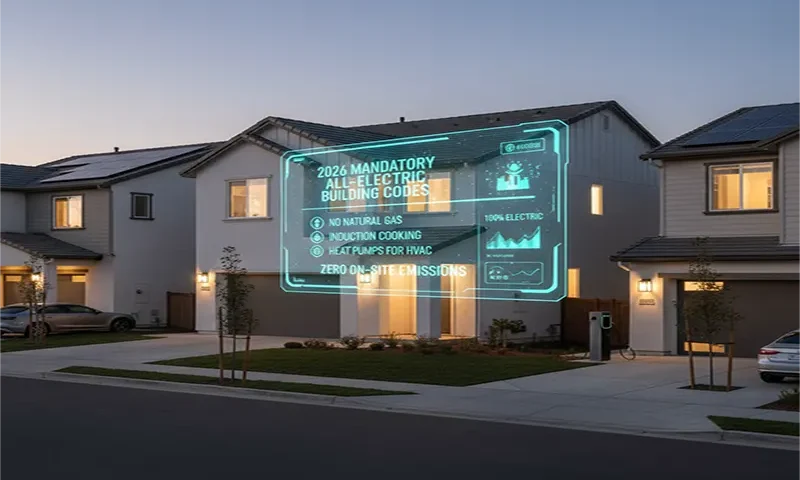
Mandatory All-Electric Building Codes for New Residential Construction in 2026

The year 2026 marks a definitive turning point in American residential architecture. What began as a series of local municipal “gas bans” has evolved into sweeping state mandates that have fundamentally altered the blueprint of the modern home. As of January 1, 2026, the transition to all-electric construction is no longer a voluntary pursuit for the “green” elite; in major markets like New York and California, it is now the law of the land.

For developers, architects, and municipal planners, this shift represents a move toward decarbonizing the building sector—which currently accounts for roughly $30\text{–}35\%$ of state-level greenhouse gas emissions.

1. Legal Framework: Understanding the 2026 Mandates

Two major regulatory engines are driving the 2026 electrification surge.

The New York Model: The All-Electric Buildings Act

New York has officially become the first state to prohibit fossil-fuel equipment in most new residential construction. Under the All-Electric Buildings Act, building permit … READ MORE ...

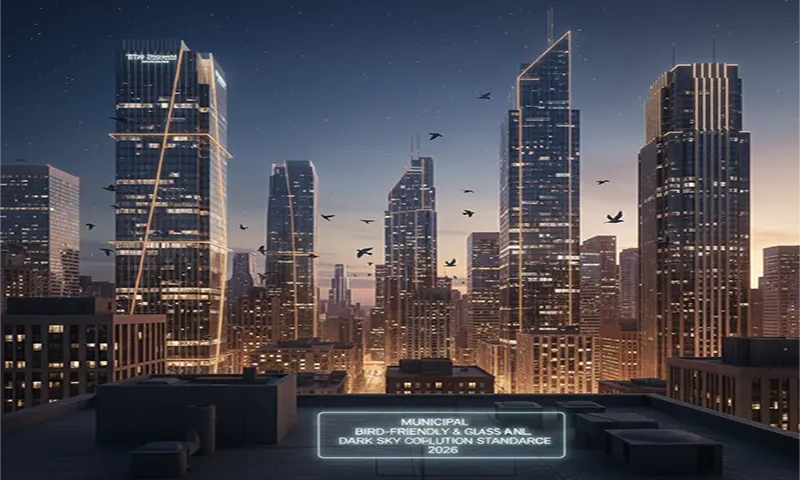
The New Urban Ethics: Municipal Bird-Friendly Glass and Light Pollution Standards for 2026

For decades, modern architecture has been defined by the pursuit of transparency—the glass-clad skyscraper standing as a symbol of openness and progress. However, as we inhabit 2026, the cost of this aesthetic has become impossible to ignore. Urban centers have increasingly become ecological “sinks,” with glass collisions claiming an estimated one billion birds annually in North America alone.

The response is a new era of “Perceptive Architecture.” Cities are no longer treating glass and light as neutral design elements but as active ecological hazards. From the federal level down to municipal zoning, new standards are transforming the “Invisible Infrastructure” of our cities into a bio-symmetric landscape that protects biodiversity while maintaining architectural excellence.

Bird-Friendly Glass: From 2×4 to the 2×2 Standard

The core of bird-friendly design is simple: birds do not perceive glass as a solid barrier. They see either a reflection of the sky and vegetation or a clear … READ MORE ...

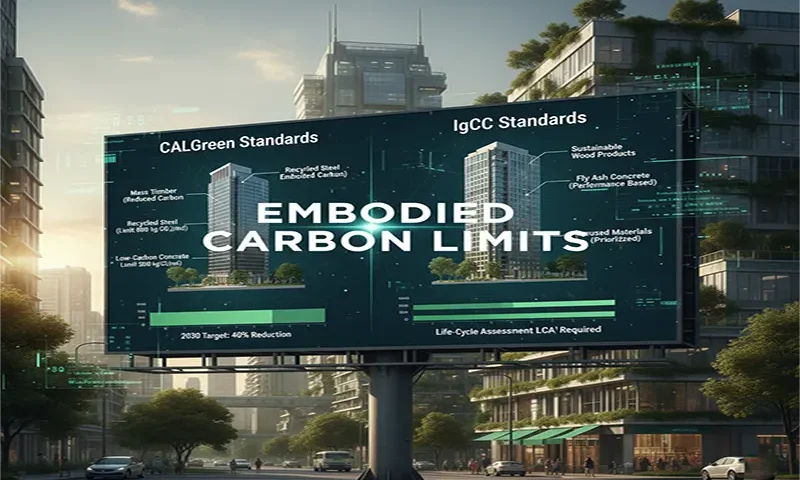
Embodied Carbon Limits for Building Materials under CALGreen and IgCC Standards

As of January 1, 2026, the landscape of commercial construction in California and across the United States has shifted. The focus of sustainable design, once dominated by operational energy (the power used to light and heat a building), has turned toward Embodied Carbon—the greenhouse gas emissions “locked in” during the extraction, manufacturing, and transportation of building materials.

In California, the mandatory 2026 updates to CALGreen (Title 24, Part 11) represent the most aggressive decarbonization policy in the nation, lowering the compliance threshold to include almost all mid-sized commercial developments. Simultaneously, the International Green Construction Code (IgCC) provides the national framework for jurisdictions outside of California to adopt similar high-performance standards.

The Regulatory Landscape: The 2026 Mandate

Effective January 1, 2026, California mandates that all new non-residential construction projects (and additions/alterations) exceeding 50,000 square feet must comply with embodied carbon reduction measures. This is a significant drop from the 2024 … READ MORE ...

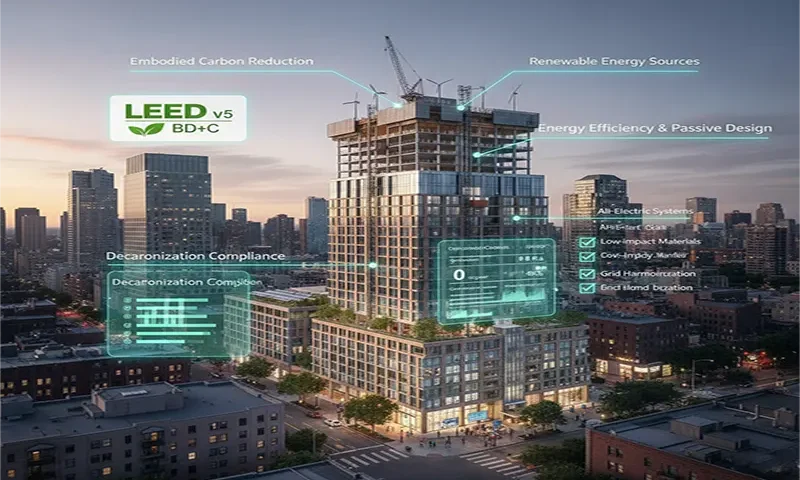
LEED v5 Building Design and Construction (BD+C) Requirements for Decarbonization Compliance

In 2026, the global real estate market has reached a critical juncture. No longer is “green building” defined simply by low-flow faucets or bike racks. With the official rollout of LEED v5, the U.S. Green Building Council (USGBC) has fundamentally recalibrated the world’s most widely used green building rating system to address the climate emergency. LEED v5 BD+C is no longer just a sustainability checklist; it is a rigorous decarbonization framework.

For the first time, Decarbonization accounts for 50% of the total available points in the system. This shift signals a transition from measuring “efficiency” to mandating “performance,” forcing project teams to account for every kilogram of carbon emitted from ground-break to the year 2050.

The 2026 Paradigm Shift: Impact-Driven Scoring

The traditional LEED categories have been reorganized under three core Impact Areas:

  • Decarbonization (50%)
  • Quality of Life (25%)
  • Ecological Conservation (25%)

This restructuring means that a … READ MORE ...

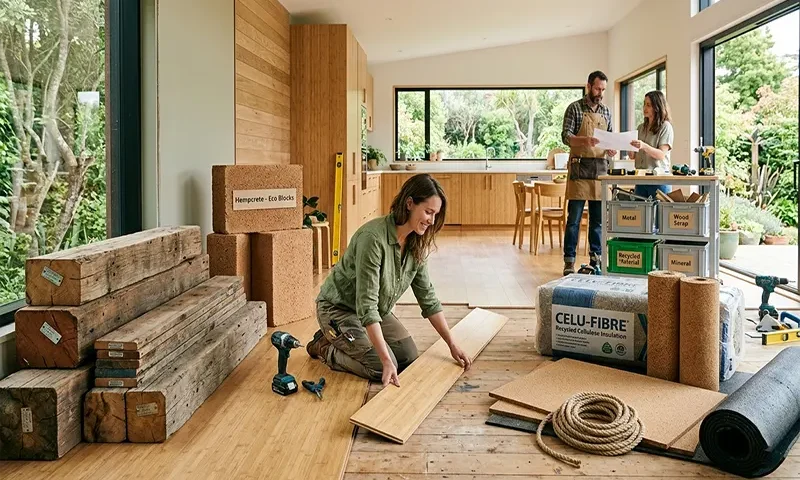
Added benefits of Building Green Home

When building a new home it is vital to consider the environment. Lately, a lot of corporations are beneath watch for their sustainability and carbon footprint but people today who program on obtaining custom houses constructed also want to think about price-effective designs and energy-efficient systems that should support reduce heating and cooling rates. Quite a few frequent building practices that have been employed even ten years ago are now below scrutiny for potentially hazardous components and also the much more you invest in green building Home the safer and more affordable your new home will be inside the extended run.

When the trendy catchphrase of new age scientists and conservationists, green home is speedily becoming adopted by additional people who recognize the value of cutting energy expenses and building eco-friendly houses. With sophisticated building components and recycled materials, new residences and renovations could be performed at an economical cost … READ MORE ...