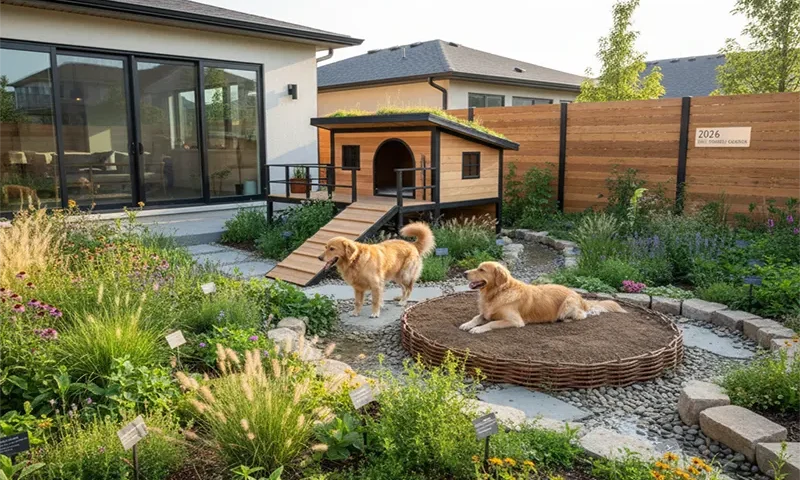
Modern Barkitecture Garden Designs with Non-Toxic, Dog-Friendly Plants (2026)

In the landscape design world of 2026, the backyard has evolved from a human-centric space into a multi-species sanctuary. This shift is driven by Barkitecture—the discipline of integrating pet-centric needs into the very fabric of our homes and gardens. No longer are dogs relegated to a dirt patch in the corner; today’s gardens are designed as “sniff-scapes” and “paws-first” environments that prioritize canine wellness, safety, and sensory enrichment.

For the modern pet owner, the challenge is balancing high-design aesthetics with a plant palette that is as resilient as it is safe. In 2026, we’ve moved past the “don’t eat that” mentality toward a “please explore this” philosophy.

The Canine-Centric Garden: Zonation and Function

Successful Barkitecture relies on zonation. Just as a house has a kitchen and a bedroom, a dog-friendly garden should be divided into functional “rooms” that cater to specific behaviors.

1. The Play and Zoomie Zone

READ MORE ...
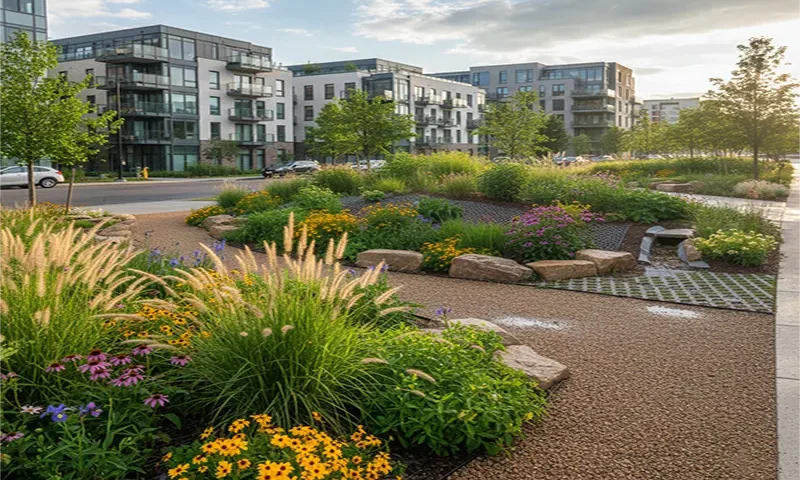
Sponge City Solutions: Climate-Resilient Rain Garden Plant Palettes for Urban Stormwater Management

The year 2026 has solidified a new paradigm in urban planning: the “Sponge City.” As cities face the compounding pressures of the Urban Heat Island (UHI) effect and increasingly volatile precipitation patterns, the traditional “gray” infrastructure of concrete pipes and sewers is no longer sufficient. Enter Green Stormwater Infrastructure (GSI)—specifically the climate-resilient rain garden.

A modern rain garden is not merely a collection of water-loving plants; it is a sophisticated bioretention system designed to bridge the gap between two environmental extremes: 48 hours of total soil saturation followed by weeks of intense, reflective urban heat. Success in this dual-stress environment requires a shift from ornamental selection to a rigorous “adaptive native” philosophy.

The Bioretention Anatomy: Engineering for Life

To the casual observer, a rain garden looks like a shallow flower bed. Below the surface, however, it is a high-performance filter. A resilient cell typically consists of:

  • Engineered Soil Media
READ MORE ...
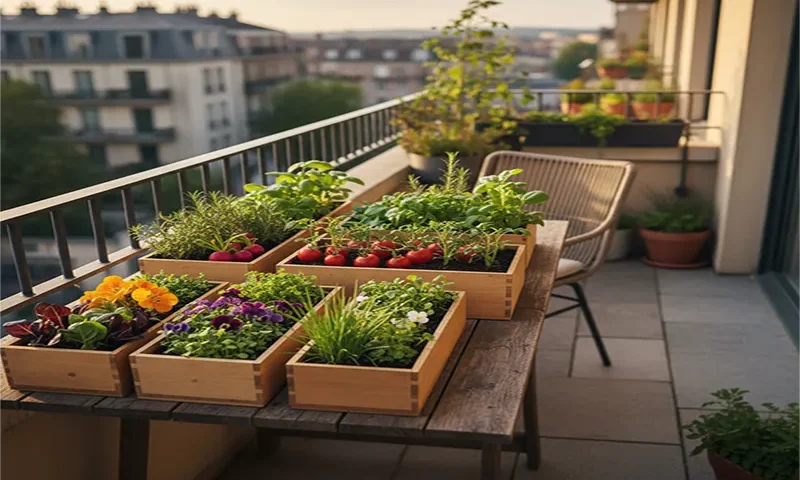
Botanical Bento: Edible Container Gardening Ideas for Small Balconies

In 2026, urban dwellers are reimagining the small balcony not just as a place for a chair and a coffee, but as a Biological Sanctuary. The “Botanical Bento” trend has emerged as the sophisticated answer to high-density living—a design philosophy that treats the balcony garden like a curated Japanese lunch box. It is a system of high-density, deliberate compartmentalization where every square inch provides nourishment, visual harmony, and ecological purpose.

Unlike the “chaos gardening” of previous years, the Botanical Bento is about Micro-landscapes—highly considered arrangements that maximize yield without sacrificing the “surprisingly luxurious” aesthetic.

The Bento Strategy: Compartmentalization & Layering

The secret to a successful balcony bento is organization. By breaking your space into “compartments,” you create a sense of depth that makes even a tiny area feel like a sprawling estate.

  • The “Bento Box” Layout: Instead of scattered pots, use modular troughs or raised beds with internal
READ MORE ...
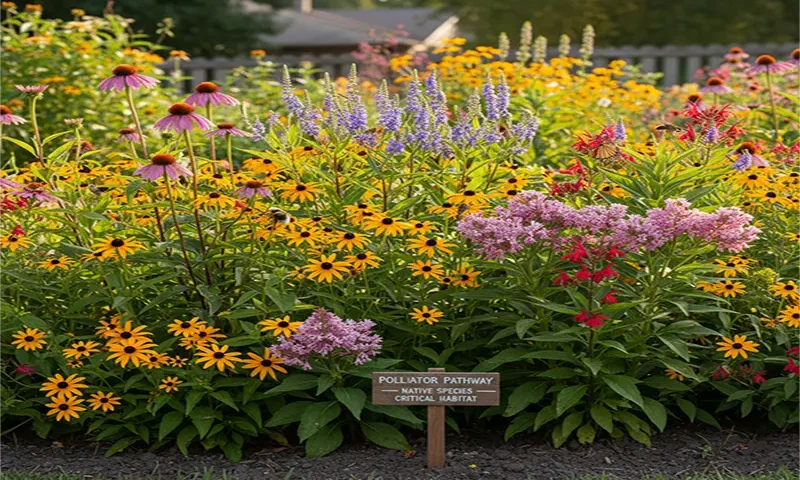
Keystone Native Plant Species for Supporting Local Pollinator Pathways

In the field of restoration ecology, the year 2026 has marked a definitive shift in how we view our backyard gardens. We have moved past the generic “save the bees” sentiment toward a more precise, data-driven approach: building functional pollinator pathways. The central pillar of this strategy is the use of keystone native plant species.

Just as the keystone in a Roman arch holds the entire structure together, these specific plants provide the essential foundation for our local food webs. Without them, the arch of biodiversity collapses.

The Keystone Concept: 14% Supporting 90%

The biological reality of our ecosystems is surprisingly lopsided. Research by entomologist Dr. Doug Tallamy and his colleagues has revealed a startling statistic: a mere 14% of native plant genera support 90% of the butterfly and moth species (Lepidoptera) that provide the critical protein (caterpillars) needed to feed birds and other wildlife.

In a pollinator … READ MORE ...