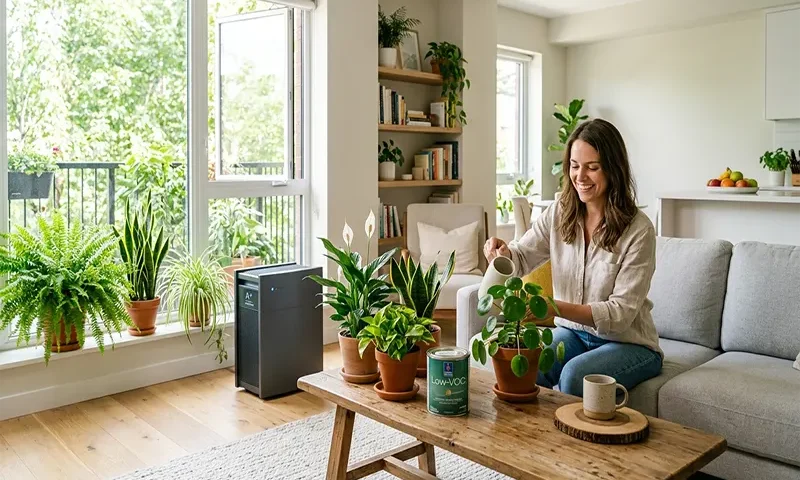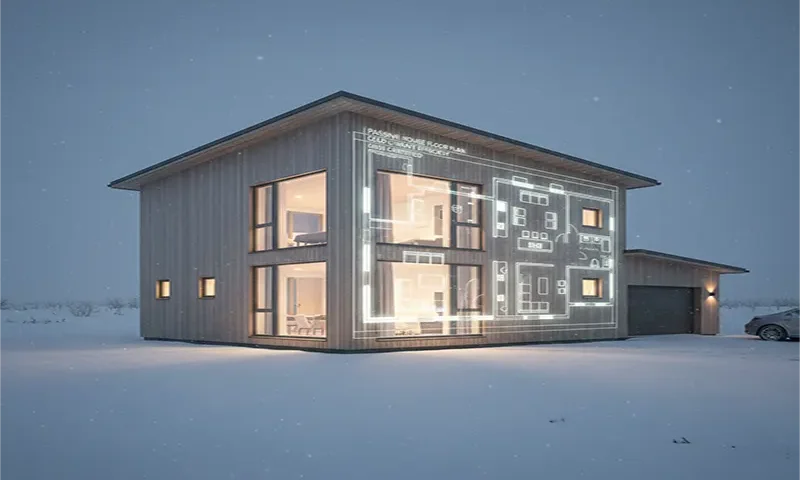
Contemporary Passive House Floor Plans for Cold Climate Efficiency

In the architectural landscape of 2026, the definition of a “home” has shifted. As climate volatility introduces more frequent and severe polar vortices, the Passive House standard has graduated from a niche environmental goal to a critical blueprint for absolute resilience. In cold climates, a modern floor plan is no longer just about aesthetics; it is a thermal strategy—a “Fortress of Warmth” designed to maintain habitable temperatures for weeks, even during total grid failure.

The 2026 Passive House—certified by the Passive House Institute (PHI) or Phius—utilizes the latest in vacuum insulation, bio-based structural cores, and AI-driven thermal orchestration to achieve a 90% reduction in heating energy compared to legacy building stock.

1. The Anatomy of a Cold-Climate Envelope

To survive sub-zero winters, the building envelope must transition from a “skin” to a high-performance “shield.”

Super-Insulation & The CLT Revolution

Traditional stick-framing is being replaced by Cross-Laminated Timber (CLT)READ MORE ...

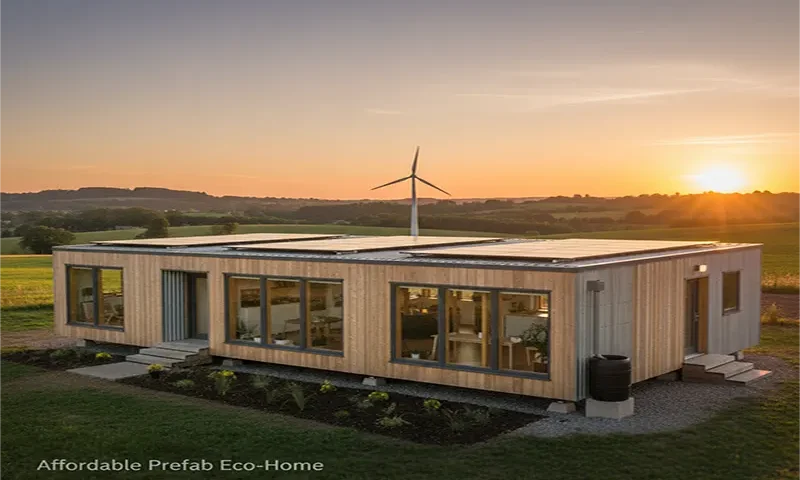
Attainable Sustainability: Affordable Prefab Eco-Friendly House Plans with Low Carbon Footprints

In 2026, the intersection of the housing affordability crisis and the climate emergency has reached a tipping point. Traditional “stick-built” construction—long the standard for residential housing—is increasingly viewed as inefficient, wasteful, and prohibitively expensive. The solution is no longer found in the slow, weather-dependent chaos of a traditional job site, but in the precision of the factory floor.

The modern prefab (prefabricated) revolution is not about the “mobile homes” of the past. It is about industrialized construction (IC): a method that treats home building with the same technological rigor as aerospace engineering. By shifting construction to a controlled environment, we can finally achieve the “triple bottom line”: homes that are affordable to buy, cheap to operate, and gentle on the planet.

The Prefab Revolution: The Precision Advantage

The environmental argument for prefab starts with waste reduction. In traditional construction, roughly 10% to 15% of materials delivered to a site … READ MORE ...

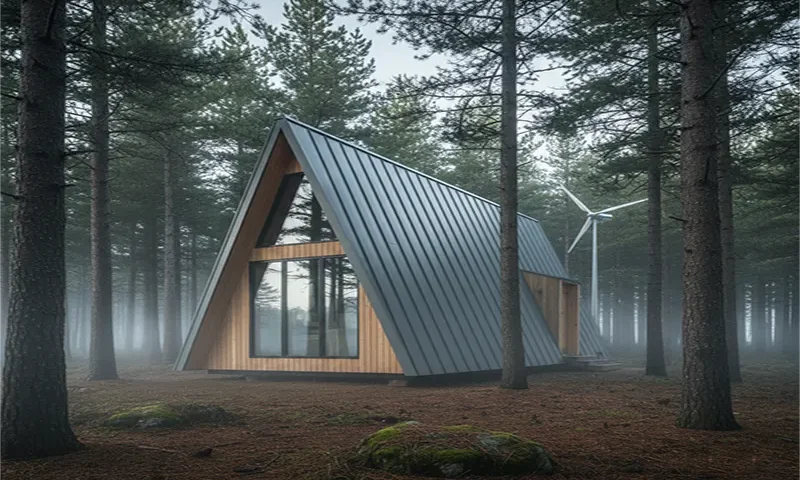
Small Footprint: Modern Eco-Friendly Cabin Plans for Narrow Lots

The dream of owning a secluded getaway often hits a literal wall when faced with the reality of modern land parcels. As prime real estate becomes scarcer, “in-fill” lots and slim recreational plots—sometimes as narrow as 25 to 30 feet—are becoming the new standard for eco-conscious builders.

However, a narrow lot isn’t a limitation; it’s a design catalyst. The philosophy of “building up, not out” allows homeowners to minimize their environmental disturbance, preserving the very soil and local flora they moved to the woods to enjoy. By embracing verticality and precision engineering, we can create modern sanctuaries that feel expansive despite their slender silhouettes.

Architectural Strategies for Slim Spaces

Designing for a narrow footprint requires a departure from traditional “wide-ranch” thinking. To avoid the feeling of living in a hallway, modern cabin plans utilize three core strategies:

Vertical Living and Volumetric Design

When you cannot expand horizontally, the sky is … READ MORE ...

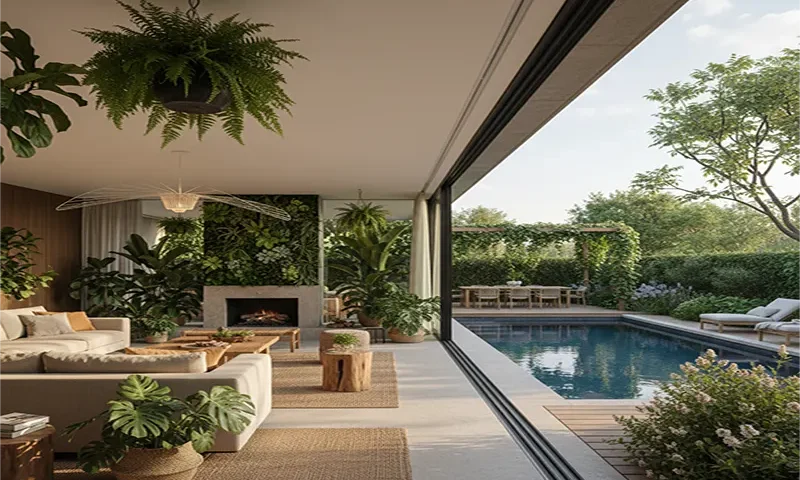
Modern Biophilic Home Designs for Sustainable Indoor-Outdoor Living

In 2026, the concept of a home has undergone a radical transformation. We have moved past the era of stark, “clinical” minimalism and entered the age of the Biological Sanctuary. Modern biophilic design is no longer just about adding a few potted plants to a room; it is an evidence-based architectural framework that treats the home as a living, breathing ecosystem. By weaving nature’s rhythms—light, texture, and organic geometry—into the very fabric of our dwellings, we are creating spaces that don’t just house us, but actively heal us.

The 2026 Biophilic Mandate: From “Decor” to “System”

The modern biophilic mandate is rooted in the psychological theory of Soft Fascination. Unlike the “hard fascination” required to navigate a digital screen or a busy city street, nature captures our attention effortlessly, allowing our directed attention reserves to replenish. In 2026, architects are using this to combat “digital fatigue” by designing … READ MORE ...

Modern Net Zero Energy House Plans with Solar Integration

The dream of a home that gives back as much as it takes is no longer a distant vision; it’s the cutting edge of contemporary residential architecture. In 2026, the concept of a Net Zero Energy house has evolved beyond niche green building to become a benchmark for sustainable living, blending advanced technology with thoughtful design. At its core, a Net Zero home is an energy-efficient dwelling that produces as much renewable energy on-site, typically through solar power, as it consumes over the course of a year. It’s a harmonious balance, a testament to what’s possible when innovation meets ecological responsibility, promising both significant environmental benefits and long-term financial savings for homeowners.

The “Fabric First” Approach: Building an Airtight, Insulated Shell

Before any solar panel even touches the roof, the foundation of a Net Zero home lies in its “fabric first” approach. This principle prioritizes creating an exceptionally energy-efficient … READ MORE ...