
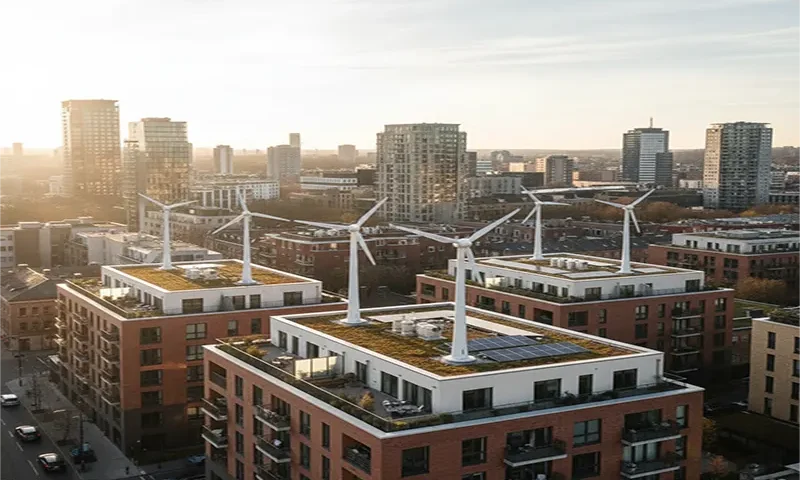
Quiet Vertical Axis Wind Turbines for Residential Rooftops in Urban Areas
As cities transition toward decentralized green energy in 2026, a new silhouette is appearing on the urban skyline. Moving beyond the massive, three-bladed giants seen in rural wind farms, a more compact and elegant technology is taking over city rooftops: the Vertical Axis Wind Turbine (VAWT). Designed specifically to thrive where traditional turbines fail, VAWTs are the key to unlocking the untapped energy potential of the “urban canyon.”
The Urban Wind Challenge: Why Cities Need VAWTs
Traditional Horizontal Axis Wind Turbines (HAWTs)—the ones that look like giant fans—are designed for the “laminar” flow of open plains, where wind blows steadily from a single direction. In a city, however, wind is “dirty.” It hits skyscrapers, bounces off pavement, and creates chaotic, multi-directional turbulence.
A standard turbine on an urban rooftop spends most of its energy trying to “yaw” (turn) into the wind. This constant hunting causes mechanical stress, excessive vibration, … READ MORE ...
