
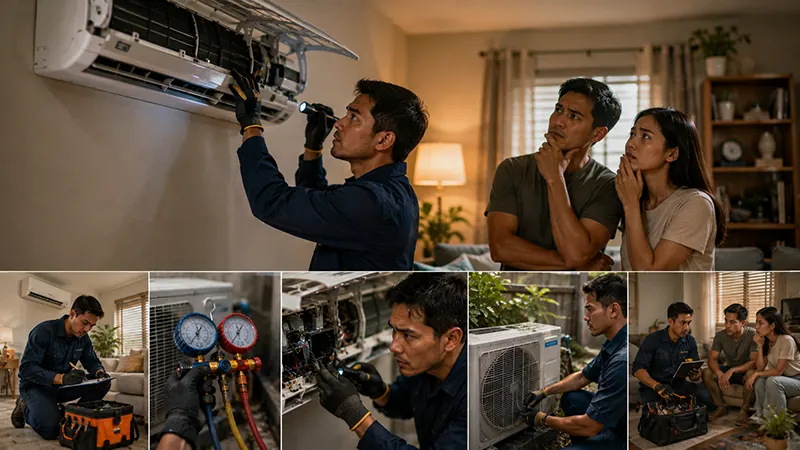
An air conditioner can run continuously while delivering little cooling. The real cause may involve airflow, thermostat settings, dirty coils, refrigerant trouble, electrical faults, or outdoor-unit problems. Professional diagnosis follows a clear sequence, helping homeowners avoid guesswork, unnecessary part replacements, and further damage during hot, humid weather conditions at home.
When an air conditioner runs without cooling the house, the operating sound can create false reassurance. The system is active, but something is preventing it from absorbing indoor heat or releasing that heat outside. Simple causes include an incorrect thermostat setting or clogged filter. More serious possibilities include frozen coils, refrigerant leaks, electrical faults, or compressor trouble. Requesting HVAC help in Ponchatoula, LA gives trained technicians the opportunity to test the entire cooling process instead of guessing from one symptom. Accurate diagnosis protects the equipment, restores comfort faster, and helps prevent a small problem from becoming an expensive failure later.
1. Experts Begin With the Thermostat
A technician normally starts with the system controls. The thermostat should be set to cooling mode, with the selected temperature below the current indoor temperature.
Incorrect settings, weak batteries, damaged wiring, poor placement, or an inaccurate sensor can make the air conditioner operate incorrectly. A thermostat near direct sunlight, an exterior door, or a heat-producing appliance may not represent conditions throughout the home.
The technician may compare the thermostat reading with a separate temperature measurement and test whether the system responds properly to commands.
2. Airflow Is Checked Before Major Components
Restricted Air Can Mimic Equipment Failure
An air conditioner cannot cool effectively without steady airflow. A heavily clogged filter may reduce the amount of air moving across the indoor coil. Blocked return vents, closed supply registers, blower problems, or damaged ductwork can create similar symptoms.
Homeowners can safely check whether the filter is dirty and whether visible vents are open. However, weak airflow that continues after these checks requires professional attention.
Experts may inspect:
- Filter condition and fit
- Return-air restrictions
- Supply-vent airflow
- Blower operation
- Accessible duct connections
- Indoor coil condition
This step helps separate an airflow problem from a refrigeration or electrical fault.
3. Technicians Compare Air Temperatures
Checking the temperature of air entering and leaving the system provides useful diagnostic information. The difference helps technicians determine whether the equipment is removing heat as expected.
A small temperature change does not identify one specific problem by itself. It may relate to restricted airflow, dirty coils, incorrect refrigerant conditions, compressor trouble, or high indoor heat and humidity.
Professionals interpret temperature readings alongside pressure, airflow, electrical, and equipment-condition tests.
4. A Frozen Coil Signals Another Problem
Ice on the indoor coil or refrigerant line does not mean the air conditioner is producing extra cooling. It indicates that the coil has become too cold for normal operation.
Common causes include poor airflow and refrigerant problems. Continuing to run a frozen system can restrict airflow further and place additional strain on the compressor.
Turn off cooling if you see ice. Do not scrape it away or apply direct heat. Allowing the system to thaw does not fix the cause, so arrange an inspection before returning it to normal operation.
5. Refrigerant Must Be Tested, Not Guessed
Refrigerant absorbs heat indoors and releases it outside. When system conditions are incorrect, the air conditioner may run for long periods without providing enough cooling.
Low refrigerant often indicates leakage. Simply adding more refrigerant without identifying the source may provide only temporary improvement. Accurate service requires proper measurements and leak investigation.
Seeking HVAC help in Ponchatoula, LA allows a trained technician to evaluate refrigerant conditions, inspect connections, and determine whether a repair is practical. Refrigerant work should never be treated as a homeowner maintenance task.
6. The Outdoor Unit Must Release Heat
The outdoor unit contains components that help release heat removed from the house. Dirt, leaves, restricted airflow, fan trouble, or electrical faults can prevent this process.
Homeowners can keep the surrounding area clear of debris and vegetation. The equipment itself should remain closed. Internal cleaning, electrical testing, and component repair require professional tools and training.
A technician may inspect the condenser coil, fan motor, capacitor, contactor, wiring, and compressor operation.
7. Electrical Problems Can Allow Partial Operation
An air conditioner contains several electrical circuits and components. One part may operate while another fails. The indoor blower could run even when the outdoor unit or compressor does not start.
This creates the impression that the AC is working because air continues coming from the vents. However, that air may not be cooled.
Repeated breaker trips, buzzing sounds, delayed startup, or an outdoor fan that does not turn require prompt service. Do not repeatedly reset a breaker without identifying why it opened.
8. Duct Problems Can Hide Successful Cooling
Sometimes the equipment produces cool air correctly, but damaged or poorly connected ducts prevent it from reaching living areas.
Conditioned air may escape into an attic, crawl space, or wall cavity. Hot, humid air may also enter through duct gaps. The result can be weak cooling, uneven temperatures, longer cycles, and increased energy use.
Airflow measurements and duct inspection help technicians determine whether the problem is located inside the equipment or within the distribution system.
9. Why Professional Diagnosis Follows a Sequence
Replacing a part based on one symptom can waste money and leave the actual problem unresolved. Experienced technicians test the system in a logical order.
A typical diagnostic process may include:
- Confirming thermostat operation
- Checking filter condition and airflow
- Measuring indoor temperature changes
- Inspecting coils and drainage
- Evaluating refrigerant conditions
- Testing electrical components
- Examining outdoor-unit performance
- Reviewing accessible ductwork
This process helps identify the cause instead of treating only the symptom.
FAQs
1. Why Is the AC Blowing Air That Feels Warm?
The thermostat may be set incorrectly, or the outdoor unit, compressor, refrigeration circuit, or electrical controls may not be operating correctly.
2. Can a Dirty Filter Stop an AC From Cooling?
Yes. Severe filter blockage can restrict airflow across the indoor coil, reduce cooling performance, and contribute to coil freezing.
3. Should I Turn Off an AC With Ice on It?
Yes. Turn off cooling and arrange service. Operating a frozen system can increase strain and does not address the underlying problem.
4. Why Does the Indoor Fan Run When the Outdoor Unit Does Not?
The two sections use different components and controls. An electrical fault, failed capacitor, damaged motor, or other issue may stop outdoor operation.
5. Does Low Refrigerant Mean the System Only Needs a Recharge?
Not necessarily. Low refrigerant often points to a leak. The source should be identified before the correct repair is recommended.
Final Takeaway
An air conditioner that runs without cooling can have a simple control problem or a more serious mechanical fault. Thermostat settings, clogged filters, restricted airflow, frozen coils, dirty outdoor equipment, refrigerant leaks, electrical failures, and damaged ducts can produce similar symptoms. That is why accurate testing matters.
Homeowners can check thermostat settings, inspect the filter, open visible vents, and clear debris from around the outdoor unit. They should not open electrical panels, handle refrigerant, scrape ice from coils, or repeatedly reset breakers. Record unusual sounds, odors, icing, weak airflow, and the rooms most affected before scheduling service. Professional HVAC help in Ponchatoula, LA uses temperature, airflow, pressure, electrical, and equipment-condition tests to identify the actual cause. A structured diagnosis reduces guesswork, supports an appropriate repair, and helps restore dependable cooling before continued operation causes further damage.

