
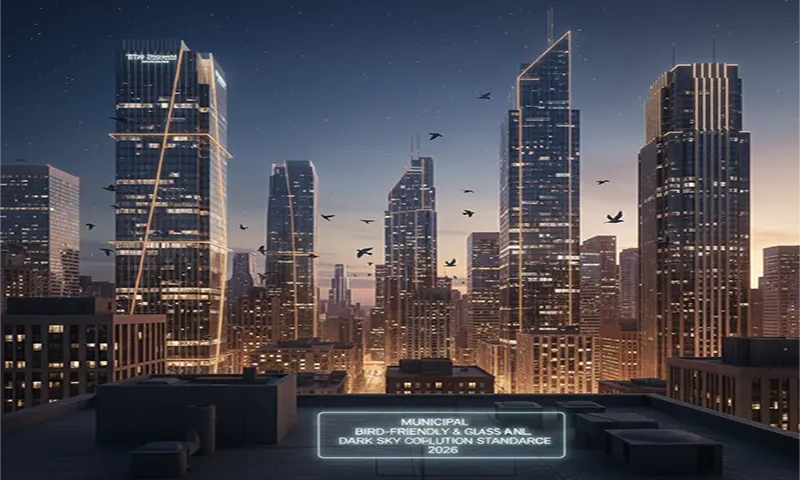
The New Urban Ethics: Municipal Bird-Friendly Glass and Light Pollution Standards for 2026
For decades, modern architecture has been defined by the pursuit of transparency—the glass-clad skyscraper standing as a symbol of openness and progress. However, as we inhabit 2026, the cost of this aesthetic has become impossible to ignore. Urban centers have increasingly become ecological “sinks,” with glass collisions claiming an estimated one billion birds annually in North America alone.
The response is a new era of “Perceptive Architecture.” Cities are no longer treating glass and light as neutral design elements but as active ecological hazards. From the federal level down to municipal zoning, new standards are transforming the “Invisible Infrastructure” of our cities into a bio-symmetric landscape that protects biodiversity while maintaining architectural excellence.
Bird-Friendly Glass: From 2×4 to the 2×2 Standard
The core of bird-friendly design is simple: birds do not perceive glass as a solid barrier. They see either a reflection of the sky and vegetation or a clear … READ MORE ...
