
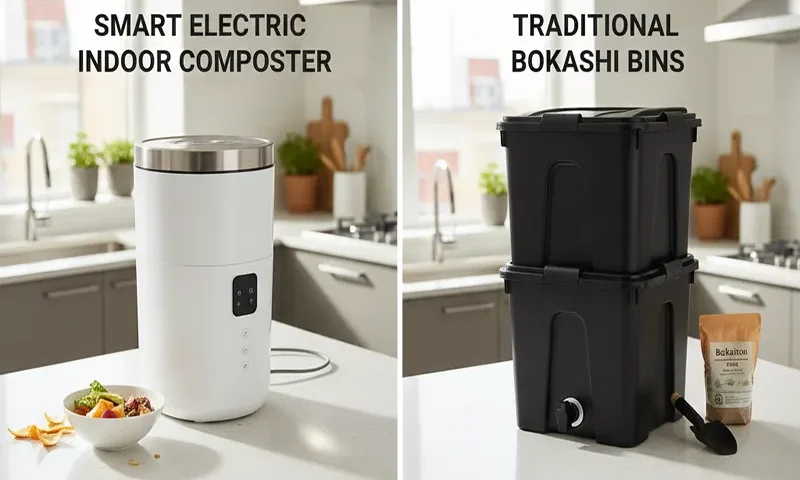
Smart Electric Indoor Composters vs. Traditional Bokashi Bins for Apartments
Living in a high-rise apartment in 2026 brings many perks—city views, proximity to work, and a smaller carbon footprint. However, it also presents a persistent, smelly dilemma: food waste. If you’re someone who cringes at the thought of tossing organic scraps into a plastic trash bag to rot in a landfill, you’ve likely looked into indoor composting.
The market has split into two warring factions. On one side, we have the Smart Electric Composter—the sleek, high-tech “bioreactor” that looks like a high-end espresso machine. On the other, we have the Traditional Bokashi Bin—a low-tech, Japanese-inspired fermentation system that has been the darling of eco-minimalists for decades.
Which one actually belongs in your kitchen? Let’s break down the tech, the smell, and the “dirty” reality of both.
The Contenders: High-Tech Grinding vs. Ancient Fermentation
Before we dive into the comparison, we must define what these systems actually do to … READ MORE ...
