
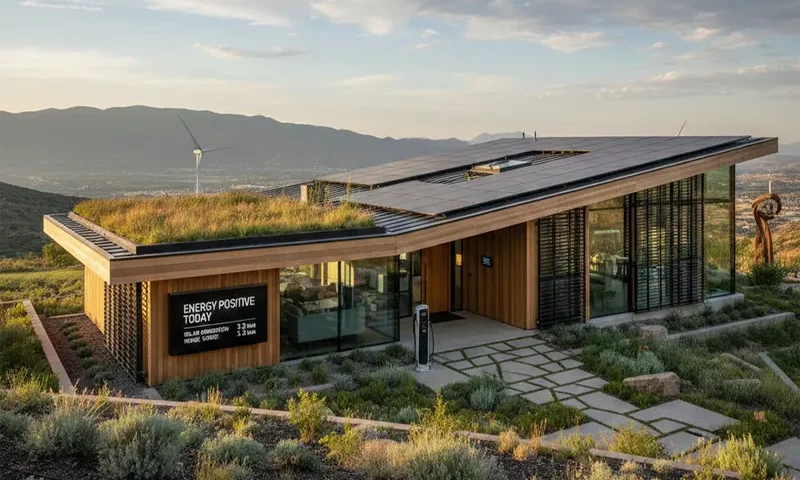
The dream of a home that gives back as much as it takes is no longer a distant vision; it’s the cutting edge of contemporary residential architecture. In 2026, the concept of a Net Zero Energy house has evolved beyond niche green building to become a benchmark for sustainable living, blending advanced technology with thoughtful design. At its core, a Net Zero home is an energy-efficient dwelling that produces as much renewable energy on-site, typically through solar power, as it consumes over the course of a year. It’s a harmonious balance, a testament to what’s possible when innovation meets ecological responsibility, promising both significant environmental benefits and long-term financial savings for homeowners.
The “Fabric First” Approach: Building an Airtight, Insulated Shell
Before any solar panel even touches the roof, the foundation of a Net Zero home lies in its “fabric first” approach. This principle prioritizes creating an exceptionally energy-efficient building envelope, minimizing the home’s heating and cooling demands from the outset. Imagine a high-performance thermos; a Net Zero house operates on similar principles, meticulously engineered to prevent energy loss.
Key components of this robust envelope include:
- High-Performance Insulation: Far beyond standard R-values, Net Zero homes often utilize continuous insulation layers, superior batt, rigid board, or spray foam insulation in walls, roofs, and foundations. This creates a thermal barrier that drastically reduces heat transfer.
- Triple-Pane Windows: While more expensive upfront, triple-pane windows offer significantly better insulation than double-pane, featuring multiple layers of glass with inert gas fills (like argon or krypton) between panes. This minimizes heat gain in summer and heat loss in winter, often accompanied by low-emissivity (low-E) coatings.
- Airtight Construction: Perhaps the most critical, yet often overlooked, element is achieving an exceptionally airtight seal. This prevents drafts and uncontrolled air leakage, which can account for a substantial portion of a home’s energy loss. Techniques include meticulous sealing of every penetration, the use of continuous air barriers, and rigorous testing, such as blower door tests, to ensure integrity.
By minimizing the energy required to maintain comfortable indoor temperatures, the “fabric first” approach reduces the total amount of renewable energy that needs to be generated, making Net Zero goals more attainable and cost-effective.
Smart Floor Plans for Optimized Energy Use
Modern Net Zero house plans are not just about what’s in the walls, but also how the spaces within them are organized. Thoughtful floor plan design plays a crucial role in enhancing energy efficiency and occupant comfort.
- Open-Concept Living with Zoned Control: While open-concept layouts remain popular for their spacious feel, smart Net Zero designs often incorporate strategies for thermal zoning. This means areas that require different temperatures or are used at different times (e.g., bedrooms vs. living areas) can be heated or cooled independently, preventing energy waste.
- Strategic Orientation and Daylighting: Architects meticulously plan window and door placement to maximize natural light and passive solar gain in winter, while minimizing unwanted heat gain in summer. Overhangs, awnings, and deciduous landscaping are often integrated to provide shading where needed.
- Multi-Functional Spaces: Efficient use of space reduces the overall footprint of the home, which in turn reduces the energy required to build and operate it. Flexible rooms that can adapt to different needs further enhance the home’s long-term sustainability.
Solar Integration as Design: Beyond the Panels
The defining feature of a Net Zero home is its capacity to generate its own clean energy, and solar integration is at the forefront of this capability. However, modern approaches move far beyond simply bolting panels onto a roof; they envision solar technology as an intrinsic part of the home’s aesthetic and structural design.
- Building-Integrated Photovoltaics (BIPV): This is where solar becomes truly seamless. BIPV refers to photovoltaic materials that are integrated directly into the building’s exterior, replacing conventional building materials like roof shingles, facade elements, or even windows.
- Solar Shingles and Tiles: Products like Tesla Solar Roof or other advanced solar shingles mimic traditional roofing materials while generating electricity. They offer a clean, uniform look that traditional rack-mounted panels cannot match, making solar a less intrusive and more aesthetically pleasing element.
- Strategic Orientation and Tilting: For optimal performance, solar arrays are meticulously designed based on the home’s geographical location, tilt angle, and orientation towards the sun. While often south-facing is ideal in the Northern Hemisphere, advanced modeling ensures maximum energy harvesting throughout the year, taking into account seasonal variations and shading.
This approach transforms solar panels from a mere add-on into an elegant, functional component of the home’s architecture, enhancing its value and visual appeal while producing clean energy.
Supporting Systems: The Silent Workhorses of Efficiency
Even with an exceptional envelope and integrated solar, a Net Zero home relies on a suite of advanced mechanical systems to achieve peak efficiency. These “silent workhorses” manage the home’s internal climate with minimal energy consumption.
- High-Efficiency HVAC with Heat Pumps: Conventional furnaces and air conditioners are energy hogs. Net Zero homes almost exclusively utilize highly efficient heat pumps (air-source or ground-source) for both heating and cooling. These systems move heat rather than generating it, making them incredibly energy-efficient, especially when paired with smart thermostats that learn occupancy patterns.
- Energy Recovery Ventilators (ERVs) and Heat Recovery Ventilators (HRVs): In a super-airtight home, proper ventilation is crucial for indoor air quality. ERVs and HRVs continuously bring in fresh outdoor air while recovering heat (or coolness) from the outgoing stale air. This process significantly reduces the energy penalty associated with ventilation, maintaining a healthy indoor environment without wasting precious conditioned air.
- Advanced Battery Storage: While Net Zero calculates annual energy balance, real-time energy management is enhanced by battery storage systems (e.g., Tesla Powerwall, Enphase Encharge). These allow homeowners to store surplus solar energy generated during the day for use at night or during grid outages, further increasing energy independence and resilience.
The Aesthetic Shift: Minimalism and Biophilia
The drive towards Net Zero has profoundly influenced modern architectural aesthetics, fostering a natural alignment with minimalism and biophilic design principles.
- Modern Minimalism: The clean lines, uncluttered spaces, and emphasis on natural materials often found in minimalist design perfectly complement the efficiency and precision of Net Zero homes. Simplicity in form often leads to reduced material consumption and simpler construction, which indirectly supports sustainability goals.
- Biophilic Design: Integrating natural elements like abundant natural light, indoor greenery, and views to the outdoors not only enhances occupant well-being but also leverages passive strategies for lighting and thermal comfort. This connection to nature underscores the harmonious relationship between the home and its environment, reflecting the core ethos of Net Zero living.
The Future of Residential Autonomy
Modern Net Zero Energy house plans with solar integration represent more than just a trend; they signify a fundamental shift in how we conceive of our homes. These residences offer an impressive Return on Investment (ROI), not just in reduced or eliminated utility bills, but also in enhanced comfort, superior indoor air quality, and a significantly smaller environmental footprint. As technology advances and construction methods become more refined, achieving Net Zero is becoming increasingly accessible and cost-effective.
Looking ahead, Net Zero homes are paving the way for true residential autonomy. They empower homeowners with energy independence, protecting them from fluctuating energy prices and grid vulnerabilities. They are not merely houses; they are intelligent, self-sufficient ecosystems, embodying a future where sustainability, advanced technology, and beautiful design converge to create living spaces that are both responsible and remarkably comfortable. This is the blueprint for the next generation of housing, ready to power our lives cleanly and efficiently for decades to come.

