
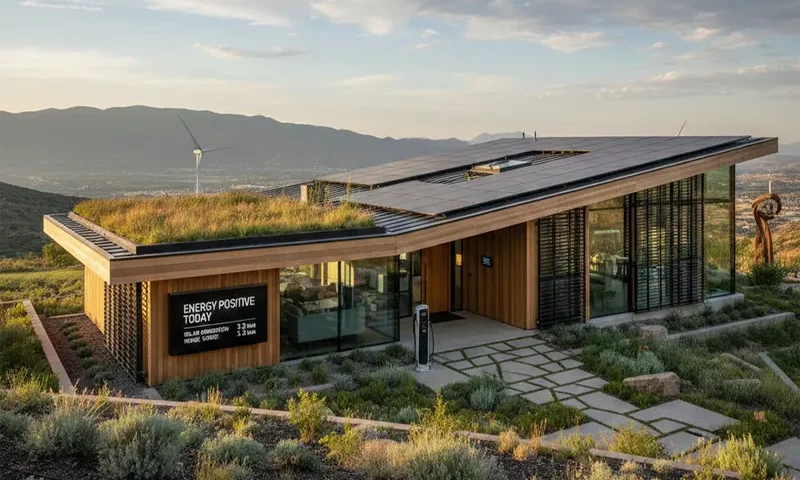
Modern Net Zero Energy House Plans with Solar Integration
The dream of a home that gives back as much as it takes is no longer a distant vision; it’s the cutting edge of contemporary residential architecture. In 2026, the concept of a Net Zero Energy house has evolved beyond niche green building to become a benchmark for sustainable living, blending advanced technology with thoughtful design. At its core, a Net Zero home is an energy-efficient dwelling that produces as much renewable energy on-site, typically through solar power, as it consumes over the course of a year. It’s a harmonious balance, a testament to what’s possible when innovation meets ecological responsibility, promising both significant environmental benefits and long-term financial savings for homeowners.
The “Fabric First” Approach: Building an Airtight, Insulated Shell
Before any solar panel even touches the roof, the foundation of a Net Zero home lies in its “fabric first” approach. This principle prioritizes creating an exceptionally energy-efficient … READ MORE ...
