
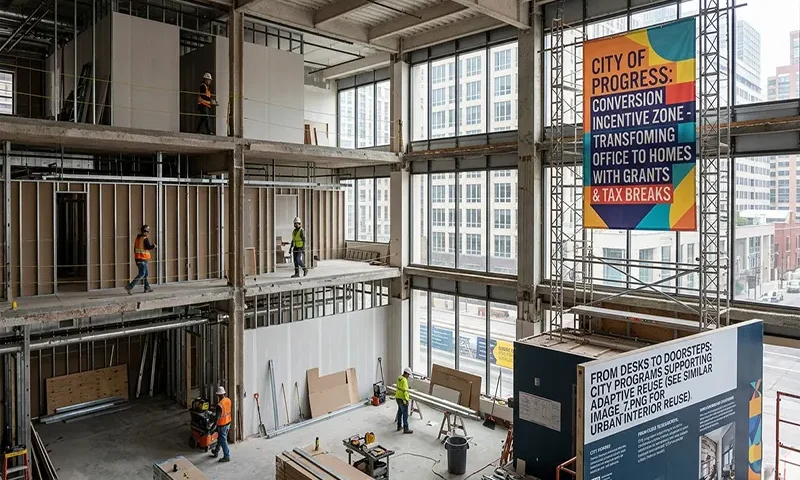
How Cities Are Incentivizing Commercial Office-to-Residential Conversions
The urban landscape is currently defined by a “double crisis.” Across North America and Europe, central business districts are grappling with record-high commercial office vacancies—a structural shift accelerated by the permanent adoption of hybrid and remote work. Simultaneously, these same cities are facing a crippling housing shortage. Adaptive reuse, the process of converting obsolete office buildings into residential apartments, has emerged as the most viable strategy to bridge this gap, yet it is fraught with technical and financial complexity.
To turn ghost offices into vibrant living spaces, cities are moving beyond mere encouragement; they are creating sophisticated, multi-layered incentive toolboxes to de-risk these projects and stimulate private investment.
The Technical and Financial Hurdles
Adaptive reuse is rarely a simple “plug and play” scenario. Office buildings were designed for high-density, daytime-only occupancy, whereas residential buildings require 24/7 infrastructure. Key hurdles include:
- Floor Plate Depth: Large office floor plates often result in
