
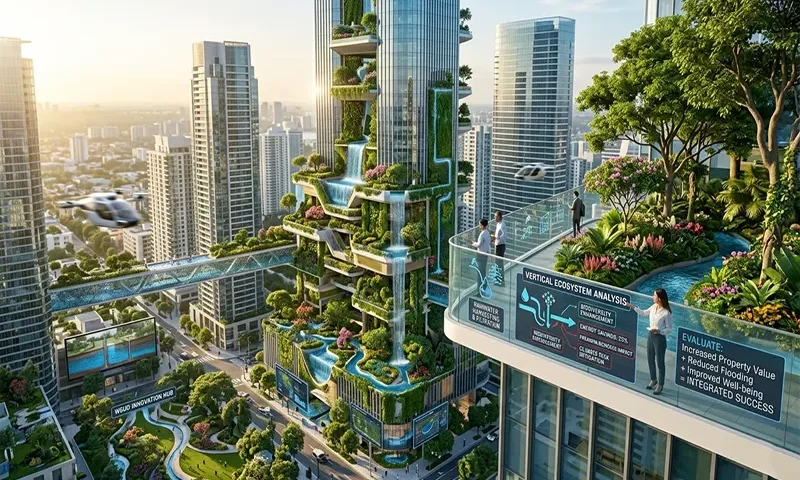
The traditional skyscraper—a monolithic, sealed structure of steel and glass—is becoming an artifact of a bygone era. In the resilient cities of 2026, the new architectural mandate is the “living tower.” By integrating Blue-Green Infrastructure (BGI) and Water-Sensitive Urban Design (WSUD) into the vertical fabric of our tallest buildings, we are transforming static assets into dynamic, resource-generating ecosystems.
The Mechanics of Vertical Resilience
In the skyscraper context, BGI and WSUD are not merely aesthetic enhancements; they are high-performance engineering systems that manage the building’s hydrological cycle.
- Blue Elements (Water Management): Modern towers now incorporate “sky-cisterns” and closed-loop greywater recycling systems. These catch, filter, and reuse rainwater for toilet flushing, cooling tower make-up, and irrigation, dramatically reducing the building’s reliance on municipal water supplies.
- Green Elements (Biological Integration): Vertical forests, tiered sky parks, and lush green facades act as the building’s “lungs.” These features are designed to serve as thermal regulators, intercepting solar radiation before it hits the building skin and providing natural shading to interior spaces.
Strategic Value Comparison
| Metric | Traditional Skyscraper | BGI/WSUD-Integrated Skyscraper |
| Stormwater Runoff | High (Direct to sewer) | Low (On-site retention & reuse) |
| HVAC Load | High (Thermal gain) | Reduced (Evaporative cooling & shading) |
| Asset Value | Market Standard | Premium (Higher tenant demand) |
| Biodiversity Index | Minimal/Zero | High (Vertical habitat networks) |
The Multi-Scalar Benefits
Integrating these natural systems provides dividends at every level of the urban environment:
- Building Performance: By utilizing evapotranspiration—the process by which plants release water vapor—vertical landscapes cool the microclimate around the building, reducing the “Urban Heat Island” (UHI) effect. This natural cooling lowers the load on HVAC systems, leading to substantial reductions in energy consumption during peak summer months.
- Stormwater Attenuation: Cities are increasingly plagued by floods from extreme weather. High-rises with BGI act as “vertical sponges,” capturing peak rainfall in sky-cisterns and delaying its entry into municipal drainage systems, effectively shielding the city from flash flooding.
- Human & Ecological Well-being: Beyond the engineering, the inclusion of biophilic design—bringing nature into the workplace—is proven to boost tenant productivity and mental health. These vertical features also serve as vital “stepping stone” habitats for urban birds, pollinators, and other fauna, supporting biodiversity in otherwise sterile concrete landscapes.
Economic and Regulatory Drivers
In 2026, the business case for BGI/WSUD has shifted from “nice-to-have” to “essential compliance.” Many global cities have adopted “Sponge City” mandates, requiring high-rise developments to manage a significant percentage of their own stormwater on-site. Buildings that exceed these requirements through innovative BGI design are not only future-proofing against regulatory shifts but are also qualifying for prestigious LEED v5 and WELL certifications. Investors and tenants alike now prioritize assets that demonstrate quantifiable ESG (Environmental, Social, and Governance) performance, with living towers consistently commanding higher rental premiums.
Overcoming Technical Hurdles
The transition to living towers does involve complex engineering challenges:
- Structural Load: Integrating deep soil beds and large water storage tanks requires proactive structural planning. Modern projects utilize lightweight, engineered growing media and high-strength, flexible waterproofing membranes to protect the primary building structure.
- Maintenance: Irrigation is not an afterthought; it is a life-support system. As of 2026, building owners are increasingly using Urban Digital Twins—AI-driven models that monitor soil moisture and plant health in real-time—to automate irrigation and detect leaks, ensuring these vertical ecosystems thrive with minimal human labor.
From Consumer to Generator
The integration of BGI and WSUD is the cornerstone of the net-positive building movement. By weaving natural hydrological and biological processes into the vertical structure, skyscrapers are evolving from resource-consuming monoliths into active, restorative participants in the urban ecosystem. As our cities densify, this approach is the only way to ensure that our built environment remains not just habitable, but truly regenerative.

