
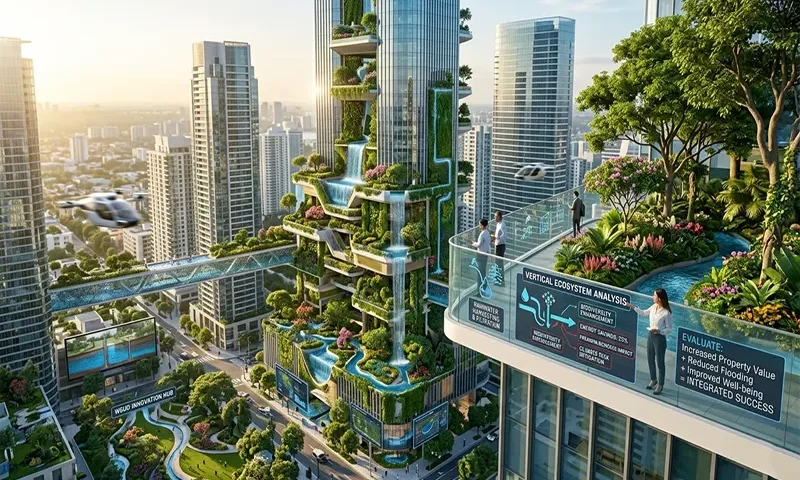
Vertical Ecosystems: The Advantages of Integrating Blue-Green Infrastructure and Water-Sensitive Urban Design in Skyscrapers
The traditional skyscraper—a monolithic, sealed structure of steel and glass—is becoming an artifact of a bygone era. In the resilient cities of 2026, the new architectural mandate is the “living tower.” By integrating Blue-Green Infrastructure (BGI) and Water-Sensitive Urban Design (WSUD) into the vertical fabric of our tallest buildings, we are transforming static assets into dynamic, resource-generating ecosystems.
The Mechanics of Vertical Resilience
In the skyscraper context, BGI and WSUD are not merely aesthetic enhancements; they are high-performance engineering systems that manage the building’s hydrological cycle.
- Blue Elements (Water Management): Modern towers now incorporate “sky-cisterns” and closed-loop greywater recycling systems. These catch, filter, and reuse rainwater for toilet flushing, cooling tower make-up, and irrigation, dramatically reducing the building’s reliance on municipal water supplies.
- Green Elements (Biological Integration): Vertical forests, tiered sky parks, and lush green facades act as the building’s “lungs.” These features are designed to serve as thermal regulators,
