
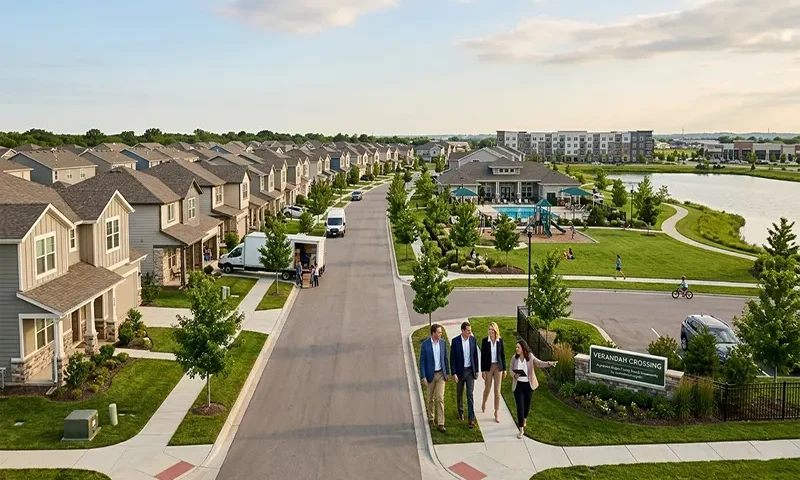
Why Institutional Investors Are Shifting Capital to Single-Family Build-to-Rent (BTR) Communities
The landscape of residential real estate has undergone a fundamental transformation. As of mid-2026, the Build-to-Rent (BTR) sector has evolved from a niche, speculative play into a core institutional asset class. For professional investors, the strategy has shifted decisively: moving away from the “scattered-site” acquisition model—where individual houses were purchased piecemeal across diverse neighborhoods—toward the purpose-built community model.
This shift is not merely a preference for new construction; it is a calculated response to the operational, demographic, and financial realities of the current housing market.
The Operational Advantage: Communities Over Collections
The primary driver behind this shift is the “horizontal multifamily” effect. Owning 100 detached homes scattered across a city creates significant operational friction: disjointed maintenance schedules, high travel costs for technicians, and inconsistent property management standards.
In contrast, a purpose-built BTR community allows for centralized operations. By clustering units, institutional owners achieve true economies of scale:
- Maintenance Efficiency: In-house
