
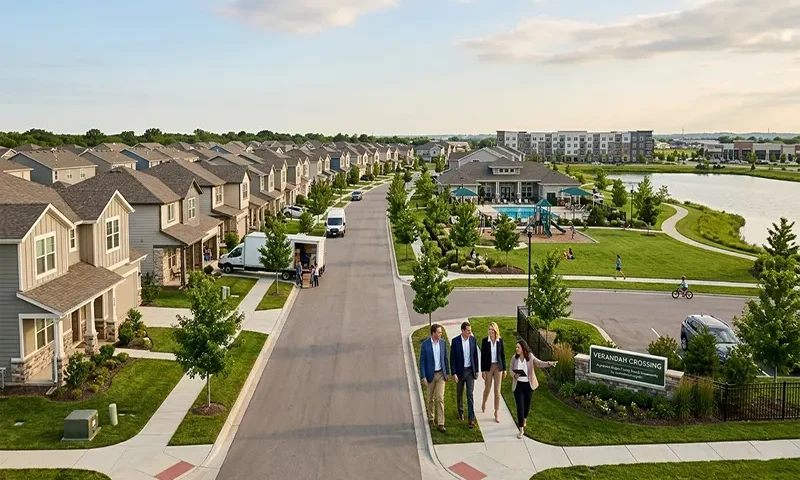
The landscape of residential real estate has undergone a fundamental transformation. As of mid-2026, the Build-to-Rent (BTR) sector has evolved from a niche, speculative play into a core institutional asset class. For professional investors, the strategy has shifted decisively: moving away from the “scattered-site” acquisition model—where individual houses were purchased piecemeal across diverse neighborhoods—toward the purpose-built community model.
This shift is not merely a preference for new construction; it is a calculated response to the operational, demographic, and financial realities of the current housing market.
The Operational Advantage: Communities Over Collections
The primary driver behind this shift is the “horizontal multifamily” effect. Owning 100 detached homes scattered across a city creates significant operational friction: disjointed maintenance schedules, high travel costs for technicians, and inconsistent property management standards.
In contrast, a purpose-built BTR community allows for centralized operations. By clustering units, institutional owners achieve true economies of scale:
- Maintenance Efficiency: In-house service teams can manage dozens of properties within a single site, drastically reducing “turnover” times and maintenance costs.
- Standardization: Purpose-built assets are designed for durability, featuring consistent appliances, flooring, and systems. This uniformity simplifies inventory management and capital expenditure (CapEx) forecasting.
- Brand Experience: Professional management of a dedicated community allows investors to cultivate a “resident experience”—a strategy borrowed from high-end multifamily—which fosters stronger loyalty and longer lease terms than the fragmented rental market.
Addressing the Structural Demand Gap
The BTR sector remains attractive in 2026 because it addresses a specific, persistent gap in the housing market: the “renter-by-necessity” cohort. High mortgage rates and elevated home prices have effectively locked a generation of Millennials, young families, and even empty-nesters out of the for-sale market.
These renters desire the lifestyle benefits of a single-family home—backyards, extra bedrooms, garage space, and access to suburban school districts—without the financial burden of a down payment or the long-term commitment of homeownership. Because BTR communities offer these features in a modern, professionally managed setting, they maintain occupancy rates that are highly resilient, even when broader market conditions fluctuate.
The Evolution of the Institutional Playbook
The 2026 market is characterized by a “maturation of discipline.” The early days of aggressive, high-leverage growth have given way to data-driven underwriting. Investors are no longer banking on rapid, unsustainable rent growth; instead, they are focusing on submarket selection, product-market fit, and operational efficiency.
Investors are currently prioritizing markets where population growth, job creation, and for-sale housing affordability pressures overlap. Regions such as the Southeast and the Sun Belt remain the primary focus, as these areas continue to see the strongest household formation and demand for suburban-density living.
Navigating the Regulatory Horizon
The sector is not without headwinds. The legislative landscape in 2026 is increasingly complex, with policymakers debating oversight for large-scale institutional landlords. However, purpose-built communities often face fewer regulatory hurdles than scattered-site portfolios, as they are inherently designed as apartment-style “communities” rather than individual dwellings in existing neighborhoods.
Institutional investors who navigate this environment successfully—by prioritizing resident-focused services and long-term community stewardship—are finding that BTR offers a compelling risk-adjusted return.
A Stabilizing Force
As we move through 2026, the BTR sector is settling into a durable role within institutional portfolios. While near-term construction may be tempered by the cost of capital and shifting policy, the long-term thesis remains intact: modern renters are demanding more than just an apartment, and institutional investors are increasingly equipped to provide it at scale. By professionalizing the single-family rental experience, these communities are not just serving a market need—they are helping to stabilize the supply of high-quality, attainable housing in a strained economy.

