
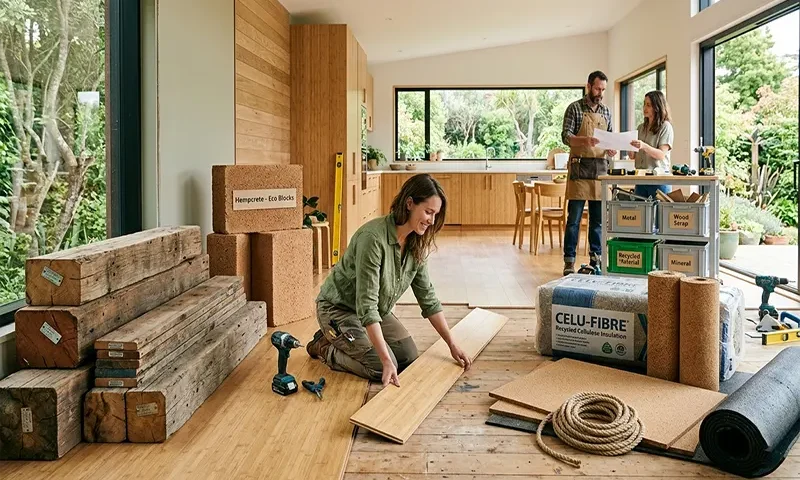
Home remodeling is often associated with the “demolition-first” mindset, which contributes significantly to global landfill waste. However, in 2026, the industry is shifting toward a circular approach. By viewing your home as a living, evolving ecosystem rather than a collection of static products, you can drastically reduce your environmental impact while simultaneously increasing the comfort, health, and resale value of your space.
The most sustainable material is often the one already on-site. Before purchasing anything new, start with an “urban mining” audit: identify existing elements that can be salvaged, refinished, or repurposed. Once you move to new materials, focus on high-performance, low-carbon, and healthy options.
The Green Material Toolkit: 2026 Edition
| Material Category | Top Sustainable Choices | Best For |
| Structural & Framing | Recycled Steel, Cross-Laminated Timber (CLT) | Framing, load-bearing walls, additions |
| Insulation | Sheep’s Wool, Mycelium, Cellulose, Cork | Walls, attics, soundproofing |
| Surfaces & Finishes | Reclaimed Wood, Bamboo, Recycled Glass Tiles | Flooring, countertops, accent walls |
| Exterior | Recycled Plastic Composites, Rice Hull-based panels | Decking, siding, fencing |
1. The Foundation: Structural & Framing
- Recycled Steel: Over 80% of structural steel used in new construction is recycled. It is incredibly durable, fire-resistant, and immune to pest damage, making it a superior choice for framing and structural reinforcements that require long-term stability.
- Cross-Laminated Timber (CLT): Made by gluing layers of solid lumber, CLT offers a strength-to-weight ratio that rivals concrete. It is increasingly popular in residential additions as a carbon-sequestering, high-performance alternative to traditional framing.
2. High-Performance, Healthy Insulation
Your home’s thermal performance is only as good as its insulation. In 2026, the shift is toward bio-based and circular materials that regulate humidity rather than just trapping air.
- Mycelium Insulation: Grown from fungal networks and agricultural waste, mycelium is a carbon-negative breakthrough. It is as solid as cork, provides excellent acoustic/thermal insulation, and can be composted at the end of its life cycle.
- Sheep’s Wool: A natural, renewable, and biodegradable option that manages moisture levels exceptionally well—crucial for preventing mold in older homes.
- Cellulose: Manufactured from recycled paper products, cellulose is a cost-effective, high-performance choice for blowing into tight wall cavities and attics.
3. Surfaces & Finishes: Aesthetics with Integrity
- Reclaimed Wood: Beyond its environmental benefits, reclaimed wood—salvaged from old barns, factories, or warehouses—carries historical character that cannot be replicated. It is a hallmark of the 2026 “circular design” aesthetic, perfect for flooring and cabinetry.
- Bamboo: As one of the fastest-growing renewable resources (maturing in just 3–5 years), bamboo is a staple for durable, high-end flooring and wall cladding.
- Recycled Glass Tiles: Modern manufacturing allows for tiles made from up to 99% post-consumer glass, diverting waste from landfills while providing stunning, light-reflective finishes for kitchens and baths.
4. Healthy Interiors: VOC-Free Focus
Indoor air quality (IAQ) is a critical 2026 priority. Conventional paints and adhesives often release Volatile Organic Compounds (VOCs) that degrade air quality for years.
- Zero-VOC Finishes: Always specify zero-VOC paints, stains, and adhesives to ensure your home renovation doesn’t come at the cost of your respiratory health.
- Biophilic Finishes: Beyond materials, integrate biophilic elements—organic shapes, tactile natural textures, and living green walls—which have been shown to improve mood and promote mindfulness within the home.
The “Whole-Life” Perspective
When selecting these materials, consider the “Whole-Life” impact. Eco-friendly choices like composite decking made from recycled plastics or bio-composites often require less maintenance, resist rot and insects, and last significantly longer than traditional treated timber.
Choosing quality over quantity is the ultimate low-waste strategy. By curating a home filled with materials that endure, you create a space that is not only better for the planet but also a more resilient, higher-value asset for your future. Whether you are tackling a DIY room refresh or a full-scale renovation, prioritizing these sustainable building blocks ensures your home remains a healthy sanctuary for years to come.

