Why Institutional Investors Are Shifting Capital to Single-Family Build-to-Rent (BTR) Communities

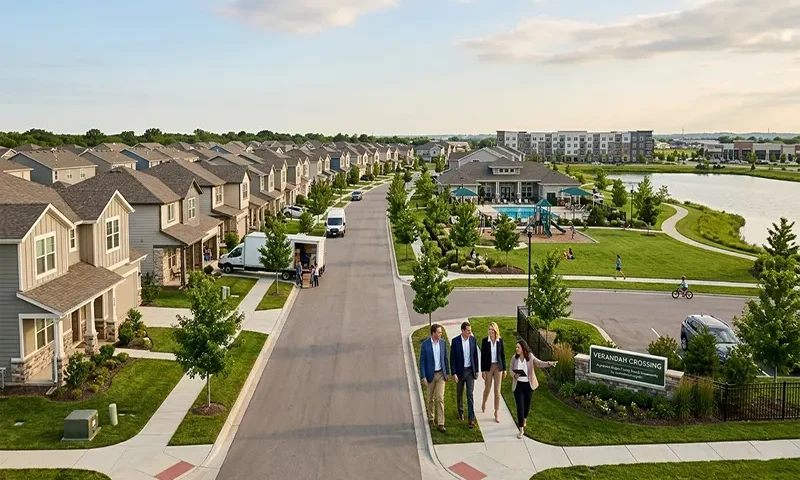
The landscape of residential real estate has undergone a fundamental transformation. As of mid-2026, the Build-to-Rent (BTR) sector has evolved from a niche, speculative play into a core institutional asset class. For professional investors, the strategy has shifted decisively: moving away from the “scattered-site” acquisition model—where individual houses were purchased piecemeal across diverse neighborhoods—toward the purpose-built community model.

This shift is not merely a preference for new construction; it is a calculated response to the operational, demographic, and financial realities of the current housing market.

The Operational Advantage: Communities Over Collections

The primary driver behind this shift is the “horizontal multifamily” effect. Owning 100 detached homes scattered across a city creates significant operational friction: disjointed maintenance schedules, high travel costs for technicians, and inconsistent property management standards.

In contrast, a purpose-built BTR community allows for centralized operations. By clustering units, institutional owners achieve true economies of scale:

  • Maintenance Efficiency: In-house
READ MORE ...
Modern Barkitecture Garden Designs with Non-Toxic, Dog-Friendly Plants (2026)

In the landscape design world of 2026, the backyard has evolved from a human-centric space into a multi-species sanctuary. This shift is driven by Barkitecture—the discipline of integrating pet-centric needs into the very fabric of our homes and gardens. No longer are dogs relegated to a dirt patch in the corner; today’s gardens are designed as “sniff-scapes” and “paws-first” environments that prioritize canine wellness, safety, and sensory enrichment.

For the modern pet owner, the challenge is balancing high-design aesthetics with a plant palette that is as resilient as it is safe. In 2026, we’ve moved past the “don’t eat that” mentality toward a “please explore this” philosophy.

The Canine-Centric Garden: Zonation and Function

Successful Barkitecture relies on zonation. Just as a house has a kitchen and a bedroom, a dog-friendly garden should be divided into functional “rooms” that cater to specific behaviors.

1. The Play and Zoomie Zone

READ MORE ...
Modern Maximalist Living Rooms with a 70s Conversation Pit Heart

In the design landscape of 2026, we are witnessing a decisive departure from the sterile, hushed tones of “sad beige” minimalism. In its place, a vibrant, soulful, and deeply tactile movement has emerged: Modern Maximalism. This isn’t about clutter; it is about the deliberate curation of abundance. It is a style that favors “more is more,” provided that “more” is high-quality, historically resonant, and unapologetically comfortable.

At the epicenter of this resurgence are two icons of 1970s opulence: the sunken conversation pit and the swirling, organic complexity of burlwood. Together, these elements transform the living room from a mere passageway into a cinematic sanctuary built for intimate human connection.

The Conversation Pit: Lowering the Standard, Elevating the Style

The conversation pit is the ultimate architectural “hug.” Originally popularized in the mid-century and perfected in the 1970s, it removes the hierarchy of traditional furniture arrangements by creating a dedicated, sunken … READ MORE ...

The Ultimate Sanctuary for Hot Sleepers: Why GOTS Certified Organic Linen Bedding is the 2026 Gold Standard

In the quiet of the night, the most significant barrier to restorative sleep is often the “microclimate” of the bed. For “hot sleepers”—those who struggle with night sweats, fluctuating body temperatures, or simply a feeling of being “trapped” by their bedding—the choice of fabric is not just a stylistic preference; it is a thermal necessity.

As we navigate 2026, the global textile industry has reached a new pinnacle of purity. The transition from conventional fabrics to GOTS (Global Organic Textile Standard) Certified Organic Linen has become the ultimate solution for those seeking the coolest, cleanest, and most sustainable sleep environment possible.

The Hot Sleeper’s Dilemma: Trapped Heat and the Synthetic Trap

Human core temperature naturally drops during sleep, a process critical for entering deep, NREM (Non-Rapid Eye Movement) stages. However, many modern bedding materials, particularly synthetic blends and even high-thread-count conventional cottons, act as insulators rather than conductors.

When body … READ MORE ...

Sponge City Solutions: Climate-Resilient Rain Garden Plant Palettes for Urban Stormwater Management

The year 2026 has solidified a new paradigm in urban planning: the “Sponge City.” As cities face the compounding pressures of the Urban Heat Island (UHI) effect and increasingly volatile precipitation patterns, the traditional “gray” infrastructure of concrete pipes and sewers is no longer sufficient. Enter Green Stormwater Infrastructure (GSI)—specifically the climate-resilient rain garden.

A modern rain garden is not merely a collection of water-loving plants; it is a sophisticated bioretention system designed to bridge the gap between two environmental extremes: 48 hours of total soil saturation followed by weeks of intense, reflective urban heat. Success in this dual-stress environment requires a shift from ornamental selection to a rigorous “adaptive native” philosophy.

The Bioretention Anatomy: Engineering for Life

To the casual observer, a rain garden looks like a shallow flower bed. Below the surface, however, it is a high-performance filter. A resilient cell typically consists of:

  • Engineered Soil Media
READ MORE ...