
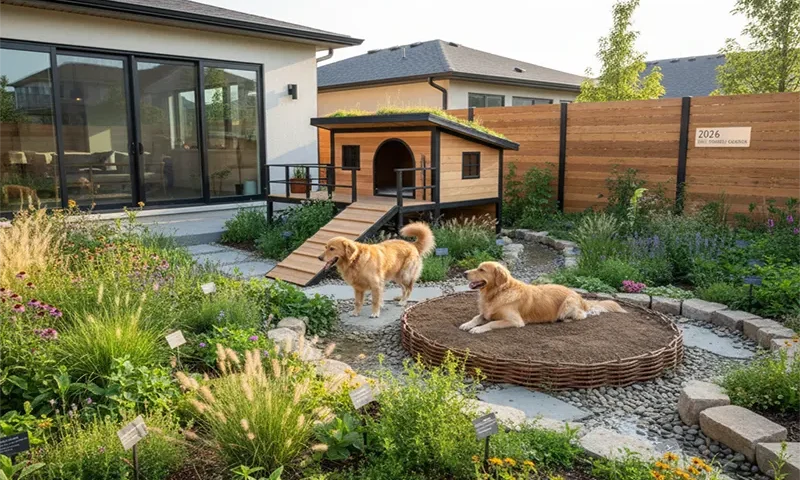
In the landscape design world of 2026, the backyard has evolved from a human-centric space into a multi-species sanctuary. This shift is driven by Barkitecture—the discipline of integrating pet-centric needs into the very fabric of our homes and gardens. No longer are dogs relegated to a dirt patch in the corner; today’s gardens are designed as “sniff-scapes” and “paws-first” environments that prioritize canine wellness, safety, and sensory enrichment.
For the modern pet owner, the challenge is balancing high-design aesthetics with a plant palette that is as resilient as it is safe. In 2026, we’ve moved past the “don’t eat that” mentality toward a “please explore this” philosophy.
The Canine-Centric Garden: Zonation and Function
Successful Barkitecture relies on zonation. Just as a house has a kitchen and a bedroom, a dog-friendly garden should be divided into functional “rooms” that cater to specific behaviors.
1. The Play and Zoomie Zone
Dogs need a “runway” for high-speed activity. In 2026, the trend is toward Lush Native Lawns or Hybrid Turfs. Traditional monoculture turf is being replaced by micro-clovers, which stay green even in the presence of nitrogen-rich dog waste. For high-traffic urban yards, hybrid products like Natura Dog Turf are popular; they allow real grass to grow through a protective, breathable mesh, preventing “bald spots” from repetitive running.
2. The Foraging/Sensory Trail
This is the “intellectual” heart of the garden. A winding path—often made of smooth river stones or play-grade cedar mulch—is lined with aromatic, non-toxic plants. This “Sniffing Zone” engages a dog’s primary sense, providing mental stimulation that can reduce anxiety and boredom.
3. The Rest & Hydration Zone
Dogs lack the sweat glands humans possess, making thermal regulation critical. Modern Barkitecture incorporates integrated drinking stations with auto-fill sensors and splash pads—shallow, textured water features that offer cooling without the drowning risks of deep pools.
Non-Toxic Plant Palettes for 2026
The 2026 plant palette is inspired by the ASPCA’s non-toxic guidelines, prioritizing species that are “safe to sniff and safe to nibble.”
Groundcovers: The Paw-Friendly Carpet
- Creeping Thyme (Thymus serpyllum): A hardy, aromatic perennial that can withstand moderate “paw traffic.” When stepped on, it releases a calming scent.
- Micro-Clover: Exceptional for nitrogen resistance; it doesn’t yellow from dog urine and requires $50\%$ less water than standard fescue.
- Labrador Violet (Viola labradorica): A robust, edible groundcover that thrives in partial shade and adds a lush, purple-green texture to the garden floor.
Perennials & Shrubs: Structure with Safety
- Lavender and Rosemary: These woody herbs are nearly “dog-proof” due to their sturdy structure. Their scents are known to have a “Zen-like” effect on anxious pets.
- Camellias: Unlike the toxic Azalea, Camellias offer show-stopping blooms and glossy evergreen foliage that is entirely non-toxic.
- Sunflowers and Snapdragons: Ideal for adding height and visual interest. Dogs, who see primarily in blues and yellows, are particularly stimulated by the bright yellow of sunflowers.
2026 “No-Fly” List (Toxic Plants)
While designing, homeowners must strictly avoid the “Big Four” of garden toxicity: Sago Palm (fatal if ingested), Azaleas, Lilies, and Oleander.
Hardscaping for Paws: Comfort and Durability
The choice of hardscape material determines the “heat profile” of your garden. In 2026, sustainable Barkitecture favors materials with high Solar Reflectance Index (SRI).
- Permeable Grey Stone: Grey pavers are less porous and absorb less heat than dark basalt or slate. If it’s too hot for your hand, it’s too hot for their paws.
- Decomposed Granite (DG): A natural, permeable choice for paths that provides excellent traction for aging dogs.
- Cedar and Pine Mulch: Unlike cocoa mulch—which contains theobromine and is toxic to dogs—cedar and pine are safe, discourage pests, and are soft underfoot.
Technical Table: Dog-Friendly Plant Guide
| Plant Species | Zone Role | Sensory Benefit | Durability |
| Creeping Thyme | Groundcover | Aromatic (Calming) | High |
| Rosemary | Structure | Aromatic (Focus) | Exceptional |
| Snapdragons | Border | Visual (Tall spikes) | Moderate |
| Micro-Clover | Lawn | Tactile (Softness) | High |
| Sunflowers | Focal Point | Visual (Yellow/Blue) | Moderate |
| Camellia | Hedge | Visual/Shade | High |
Sustainable Integration: Eco-Friendly Barkitecture
In 2026, the “green” in green space applies to the maintenance too.
- Organic Pest Control: Modern gardens avoid synthetic pesticides (neonicotinoids), which can be absorbed through a dog’s paw pads. Instead, we use “beneficial predator” programs or neem-oil-based solutions.
- Rainwater Harvesting: Automated splash pads are increasingly fed by rainwater collection barrels, reducing the garden’s water footprint.
- Pet Waste Composting: Specialized “in-ground” composters utilize anaerobic bacteria to break down waste safely, preventing it from entering landfills while nourishing non-edible ornamental beds.
The Harmonious Human-Canine Landscape
Modern Barkitecture is more than a luxury; it is a commitment to the biophilic bond between humans and their companions. By selecting a $pH$-balanced, non-toxic palette and designing for sensory enrichment, we create gardens that are no longer just “outdoor rooms,” but living experiments in joy and resilience. A garden designed for a dog is, by extension, a more fragrant, textural, and peaceful garden for the humans who share it.

