
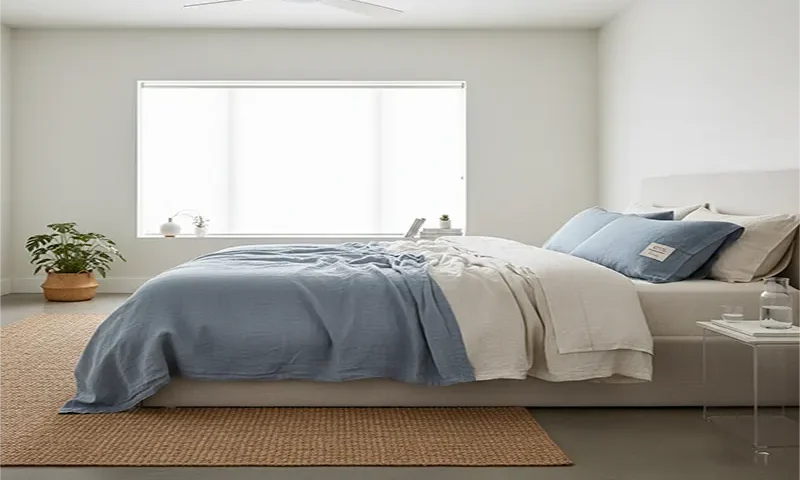
In the quiet of the night, the most significant barrier to restorative sleep is often the “microclimate” of the bed. For “hot sleepers”—those who struggle with night sweats, fluctuating body temperatures, or simply a feeling of being “trapped” by their bedding—the choice of fabric is not just a stylistic preference; it is a thermal necessity.
As we navigate 2026, the global textile industry has reached a new pinnacle of purity. The transition from conventional fabrics to GOTS (Global Organic Textile Standard) Certified Organic Linen has become the ultimate solution for those seeking the coolest, cleanest, and most sustainable sleep environment possible.
The Hot Sleeper’s Dilemma: Trapped Heat and the Synthetic Trap
Human core temperature naturally drops during sleep, a process critical for entering deep, NREM (Non-Rapid Eye Movement) stages. However, many modern bedding materials, particularly synthetic blends and even high-thread-count conventional cottons, act as insulators rather than conductors.
When body heat is trapped against the skin, your heart rate remains elevated as your body works to cool itself, leading to restless tossing and fragmented sleep. Organic linen solves this by acting as a high-performance thermoregulator, facilitating a rapid exchange of heat and air between the sleeper and the room.
What is GOTS Certification? The Ethics of Purity
To understand why GOTS (Global Organic Textile Standard) matters, one must look beyond the “organic” label on the shelf. In 2026, GOTS Version 8.0 represents the most rigorous “soil-to-sleep” audit in existence.
Beyond the Field
While “organic” usually refers to how the flax was grown (no synthetic pesticides or GMOs), GOTS covers the entire supply chain. This means:
- No Toxic Inputs: A total ban on formaldehyde, chlorine bleach, and toxic heavy metals often used in conventional dyeing and finishing.
- Social Responsibility: Verified fair wages and safe working conditions for the farmers and weavers.
- Environmental Integrity: Strict wastewater management, ensuring that the retting process of the flax doesn’t pollute local waterways.
The “Chemical Softener” Myth
Conventional linen is often treated with urea-formaldehyde resins or silicone softeners to provide “instant softness.” These chemicals don’t just off-gas; they coat the fibers, clogging the natural pores that make linen breathable. GOTS certified linen relies on mechanical softening—like stone-washing—preserving the fiber’s integrity and its ability to move air.
The Science of the Flax Fiber: A Hot Sleeper’s Best Friend
Linen is derived from the flax plant (Linum usitatissimum), a “bast fiber” with a unique molecular structure that makes it functionally superior to cotton or bamboo for cooling.
1. The Power of the Lumen
At the center of every flax fiber is a tiny, hollow pipe called the lumen. This central cavity acts as a natural air-conditioning system, allowing for constant airflow and heat dissipation.
2. Moisture Wicking vs. Absorption
Linen is highly hydrophilic; it can absorb up to 20% of its weight in moisture before it even feels damp to the touch. Unlike cotton, which holds onto moisture and can become heavy and “clingy,” linen releases moisture into the air almost as fast as it absorbs it, preventing the “clammy” feeling associated with night sweats.
3. Vapor Permeability (SD Value)
In technical terms, linen has a very low SD Value (Water Vapor Diffusion Equivalent Air Layer Thickness). A lower SD value means water vapor can pass through the fabric with minimal resistance. In the microclimate of a bed, this translates to a $3\text{–}4^\circ C$ cooler skin temperature compared to sleeping under silk or polyester.
Comparison Table: The 2026 Cooling Matrix
| Metric | GOTS Organic Linen | Conventional Cotton | Bamboo Viscose |
| Breathability | Exceptional (Hollow Fibers) | High (Depends on Weave) | Moderate (Dense Weave) |
| Moisture Wicking | Best-in-Class | Good (But Retains Water) | High (But Can Feel Sticky) |
| Chemical Load | Zero (Audited) | Moderate to High | High (Rayon Process) |
| $pH$ Balance | Skin-Neutral ($5.5\text{–}7$) | Often Alkaline | Variable |
| Durability | 30+ Years (Heirloom) | 3–5 Years | 2–4 Years |
Health Benefits: Beyond the Surface
For hot sleepers, the benefits of organic linen extend into dermatology and immunology:
- Natural Hypoallergenic: Linen is naturally resistant to bacteria, mold, and dust mites. For those with eczema or skin sensitivities exacerbated by night sweats, GOTS linen provides a sterile, non-irritating surface.
- The Pectin Softening: Linen fibers are held together by pectin. Over time and through washing, this pectin slowly dissolves, making the linen softer and more supple with every year of use. This is why organic linen is considered an “heirloom” fabric—it literally improves with age.
Maintenance for Longevity: The ‘Heirloom’ Care Guide
To maintain the cooling properties of your GOTS linen, 2026 experts recommend a “Low-Impact” care routine:
- Cold Water Wash: High heat can make flax fibers brittle. Cold or lukewarm water preserves the lumen’s structure.
- Eco-Friendly Detergents: Avoid “optical brighteners” and heavy scents, which can leave a residue on the fibers.
- Skip the Softener: Fabric softeners are the enemy of linen; they coat the fibers and reduce their moisture-wicking capacity.
- Air Dry or Low Tumble: Linen dries remarkably fast. If possible, air drying out of direct sunlight will extend the life of the bedding for decades.
Investing in Restorative Sleep
GOTS certified organic linen is more than a luxury; it is a biological tool for better sleep. By prioritizing a fabric that honors the environment as much as it honors your body’s need for thermoregulation, you are investing in a cycle of wellness that begins the moment you close your eyes. In 2026, the truly sophisticated bedroom is one that breathes.

