
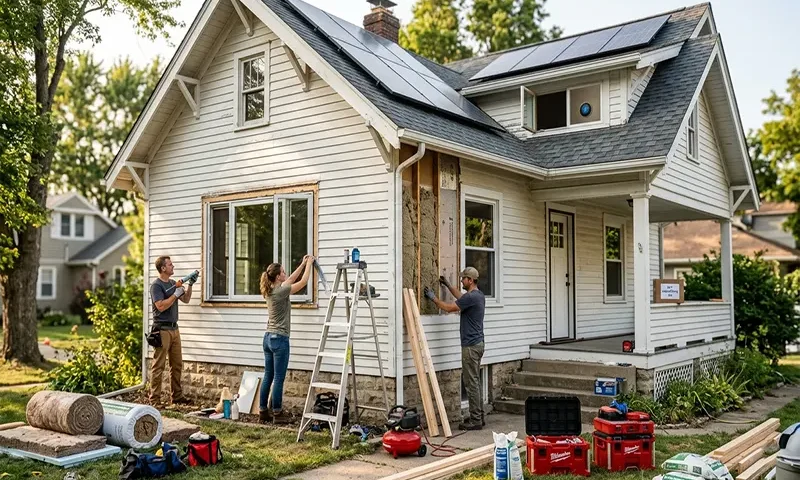
Cost-Effective Ways to Retrofit an Old House for Energy Efficiency
Older homes possess a unique charm and architectural character that is often impossible to replicate. However, they were rarely built with modern energy efficiency in mind. If you find yourself battling rising utility bills and fluctuating temperatures, it is time to shift your perspective from expensive equipment upgrades to a more foundational approach: the “envelope first” philosophy.
The Hierarchy of Efficiency: The “Envelope First” Philosophy
The most common mistake homeowners make is buying a high-efficiency heating or cooling system before fixing the building’s “envelope”—the physical shell of walls, roof, and windows that separates your living space from the outside.
Think of your home like a bucket. If that bucket has holes, it doesn’t matter how fast you pump water into it; it will never stay full. Most old houses are essentially “leaky buckets.” By focusing on sealing and insulating first, you reduce the heating and cooling load so significantly that … READ MORE ...

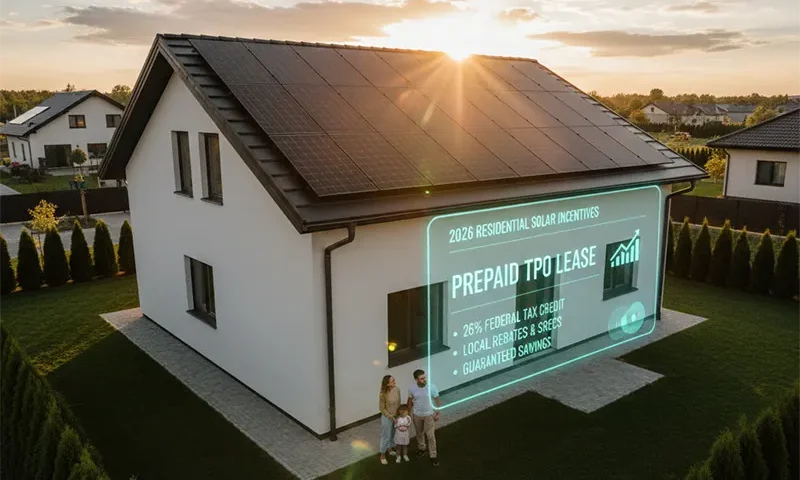
2026 Residential Solar Tax Incentives and the Rise of Prepaid TPO Leases
As of February 2026, the financial playbook for home solar has undergone a radical transformation. The legislative shift brought about by the “One Big Beautiful Bill” (OBBBA) in mid-2025 has effectively bifurcated the market. For homeowners, the era of the direct Section 25D tax credit has ended, replaced by a sophisticated “Third-Party Ownership” (TPO) ecosystem that utilizes the Section 48E Clean Electricity Investment Credit.
For the modern homeowner or real estate investor, the challenge is no longer just selecting panels; it is selecting a financial structure that captures federal incentives that are now exclusively available to commercial entities.
1. The 2026 Policy Divide: Section 25D vs. Section 48E
To understand the 2026 market, one must distinguish between the two primary sections of the tax code that govern solar energy.
The Sunset of Section 25D (Direct Ownership)
Historically, homeowners who purchased their systems with cash or a loan used Section … READ MORE ...
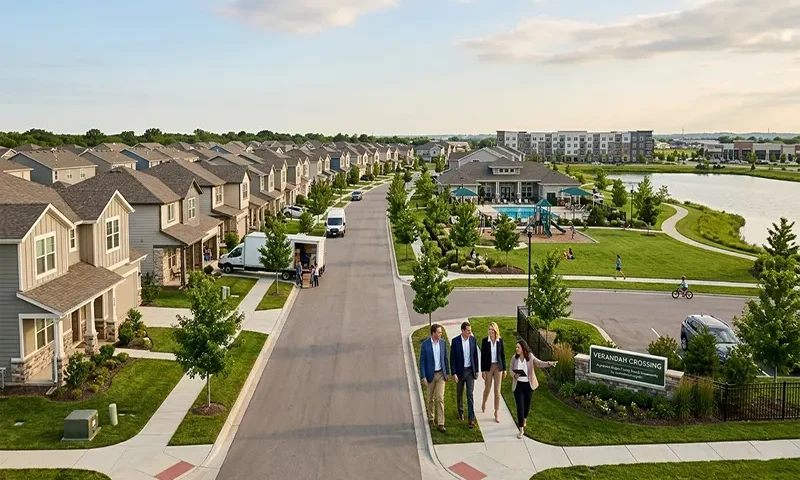
Why Institutional Investors Are Shifting Capital to Single-Family Build-to-Rent (BTR) Communities
The landscape of residential real estate has undergone a fundamental transformation. As of mid-2026, the Build-to-Rent (BTR) sector has evolved from a niche, speculative play into a core institutional asset class. For professional investors, the strategy has shifted decisively: moving away from the “scattered-site” acquisition model—where individual houses were purchased piecemeal across diverse neighborhoods—toward the purpose-built community model.
This shift is not merely a preference for new construction; it is a calculated response to the operational, demographic, and financial realities of the current housing market.
The Operational Advantage: Communities Over Collections
The primary driver behind this shift is the “horizontal multifamily” effect. Owning 100 detached homes scattered across a city creates significant operational friction: disjointed maintenance schedules, high travel costs for technicians, and inconsistent property management standards.
In contrast, a purpose-built BTR community allows for centralized operations. By clustering units, institutional owners achieve true economies of scale:
- Maintenance Efficiency: In-house
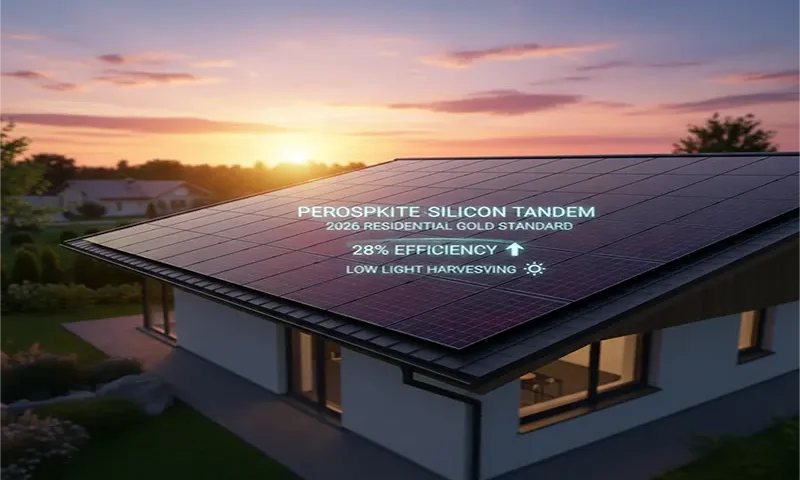
Best Perovskite-Silicon Tandem Solar Panels for Residential Use in 2026
For decades, the solar industry has been chasing the “30% barrier.” Traditional silicon panels, which currently power over 95% of the world’s rooftops, are fast approaching their theoretical ceiling—known as the Shockley-Queisser (S-Q) limit. As we navigate 2026, the breakthrough that once lived only in laboratories has finally arrived on the residential market: Perovskite-Silicon Tandem Solar Panels.
By stacking a perovskite layer on top of a standard silicon base, manufacturers are now shipping modules that produce up to 25% more power from the same roof footprint. For the 2026 homeowner, this technology represents the transition from “standard” efficiency to “ultra-high” yield.
1. Breaking the Shockley-Queisser Limit
The fundamental limit for a single-junction silicon solar cell is approximately $29.4\%$. In real-world manufacturing, this translates to module efficiencies that top out around $23\text{–}24\%$. Tandem cells bypass this by using a “double-decker” architecture.
How Tandem Cells Work
Perovskite materials are “tunable,” … READ MORE ...
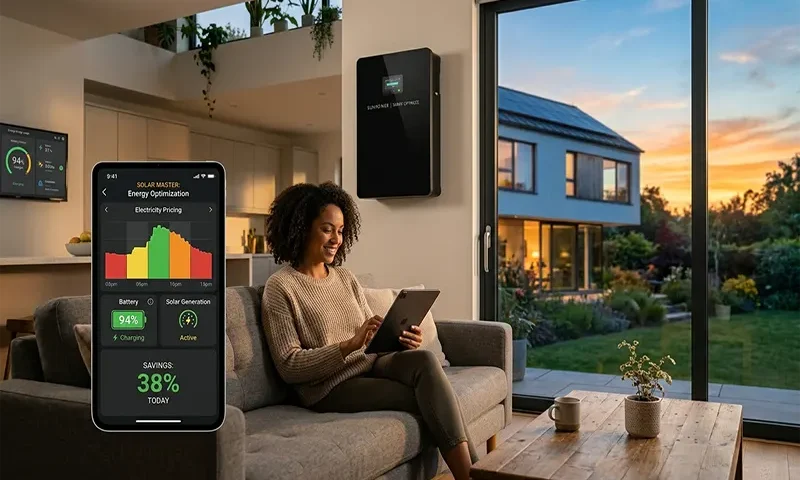
How to Use Smart Tariff Automation to Maximize Home Solar Battery Savings
In the early days of residential solar, success was measured simply: how much energy did your panels generate, and how much could you offset on your monthly bill? That “set it and forget it” era has come to an end. In 2026, the modern home has evolved into an active participant in the energy market. By combining a home solar battery with smart tariff automation, you are no longer just a consumer; you are a “prosumer”—a home energy asset manager capable of playing the market to your financial advantage.
The Paradigm Shift: From Passive Storage to Energy Arbitrage
Traditionally, homeowners used batteries for self-consumption: storing midday solar to use during the evening. While effective, this ignores the volatility of modern wholesale electricity markets.
Today, dynamic or “Time-of-Use” (ToU) tariffs link your electricity rates to real-time grid demand and renewable supply. Prices fluctuate hourly—or even every 15 minutes. During periods of … READ MORE ...