
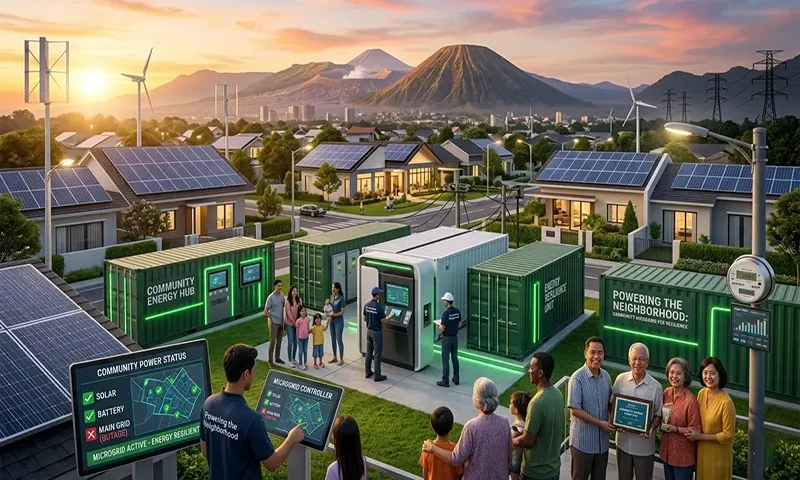
Powering the Neighborhood: How to Set Up a Community Microgrid for Energy Resilience
For over a century, our energy systems have relied on a top-down, centralized model. When a storm strikes or a transmission line fails, thousands of homes go dark simultaneously. However, as we move through 2026, a decentralization movement is taking hold. Neighborhoods are increasingly turning to community microgrids—localized energy networks that can “island” (disconnect) from the main grid during outages while remaining powered by their own renewable sources and battery storage.
A community microgrid is more than just a cluster of solar panels; it is the ultimate insurance policy against extreme weather and aging infrastructure, transforming a neighborhood from a passive consumer into an active energy participant.
The Three Pillars of a Microgrid
To function effectively, a microgrid requires three core technical components working in harmony:
- Generation: The source of power. This typically includes rooftop solar arrays on homes and community buildings, though wind turbines or small-scale combined heat
