
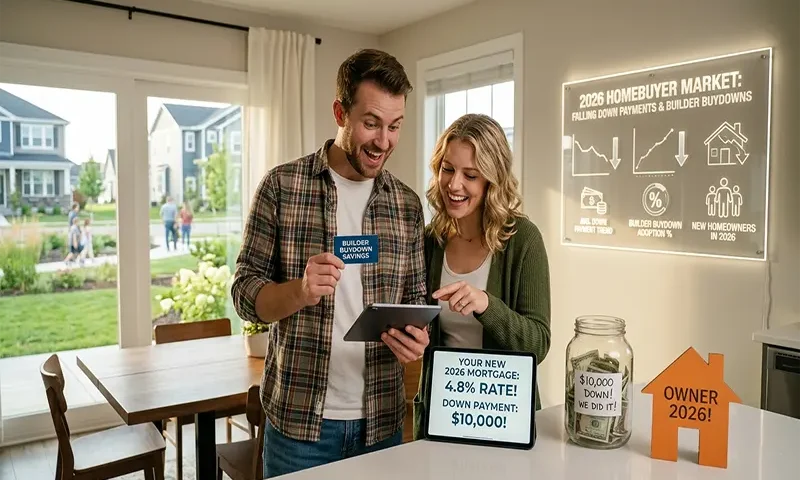
For the past several years, the narrative surrounding the American housing market has been one of frustration. Sky-high prices, aggressive bidding wars, and the “lock-in” effect created a barrier that felt, for many first-time buyers, like an impenetrable wall. However, as we move through 2026, the tide has turned. The market is cooling into a more balanced state, and for those prepared to navigate it, a “new buyer’s advantage” has emerged, driven by two key trends: falling down payment requirements and aggressive builder-funded incentives.
The Down Payment Shift: Lower Barriers to Entry
One of the most persistent myths in real estate—that you must have 20% down to buy a home—has finally begun to lose its grip. According to data from the first quarter of 2026, the median down payment has fallen to $23,400, a 19% drop year-over-year and the lowest level in four years.
This decline is not just a statistical anomaly; it represents a fundamental change in buyer behavior and lender flexibility:
- Government-Backed Utilization: More buyers are leveraging FHA (3.5% down) and VA/USDA (0% down) loans. These programs were designed specifically to bridge the gap for those who haven’t built up home equity elsewhere.
- A Softer Competitive Landscape: Sellers are increasingly willing to accept offers with lower down payments. In the ultra-competitive pandemic era, a 3.5% down payment was often dismissed in favor of cash or 20%+ down offers. Today, as homes sit on the market for longer (the median time-on-market reached 52 days in early 2026), sellers are prioritizing a solid buyer over the “perfect” financing structure.
Decoding Builder Rate Buydowns: Your “Secret Weapon”
While resale homes are seeing more concessions, new construction is currently the “bright spot” for affordability. Builders are sitting on inventory they need to move, and they are using mortgage rate buydowns as their primary tool to clear those units.
A rate buydown is essentially a pre-paid subsidy. The builder pays a lump sum to your lender to lower your interest rate for a set period—typically the first one or two years of your loan (the popular “2-1 buydown”).
- The Impact: This can lower your monthly mortgage payment by hundreds of dollars in the first few years, giving you time to settle into your home, build your savings, or wait for general market interest rates to normalize.
- Why It Matters: For a buyer feeling the pinch of monthly housing costs, a $10,000 buydown is often far more valuable than a $10,000 reduction in the purchase price. A small price cut might shave $60 off your monthly payment, while a strategic buydown can save you $300–$400 per month during the critical early years of homeownership.
Synergy: The “Sweet Spot” for First-Time Buyers
| Feature | Buying with Incentives (2026) | Traditional Mortgage (Pandemic Era) |
| Down Payment | Flexible (Avg 12.8%, as low as 3%) | High (Expectation of 20%) |
| Monthly Cost | Lowered by builder buydowns | Full market rate |
| Negotiation Power | High (Seller concessions common) | Low (Take-it-or-leave-it) |
| Market Pace | Measured (Time to inspect/decide) | Frenetic (Multiple offers/rushed) |
By combining a lower cash-to-close (thanks to lower down payments) with a reduced monthly burn rate (thanks to buydowns), the math for first-time buyers is finally beginning to pencil out.
A Strategic Guide for 2026 Buyers
If you’ve been on the sidelines, the market is inviting you to return. Here is how to execute a successful entry:
- Prioritize New Builds First: Don’t skip new construction communities. Many builders now offer financing incentives that individual sellers of resale homes cannot match.
- Focus on Monthly Cash Flow: When comparing homes, look at the monthly cost after incentives, not just the sticker price. A home that costs $10,000 more might actually be cheaper every month if the builder is covering a significant rate buydown.
- Get Pre-Approved, Not Just Pre-Qualified: In 2026, a solid pre-approval letter signals to sellers that you are a serious contender. It gives you the leverage to ask for those 3–6% seller concessions (closing cost credits or repairs).
- Don’t Over-Save at the Expense of Opportunity: If you have the credit and the minimum down payment, waiting for a 20% “mythical” down payment may cost you more in rising home values than you save in insurance premiums (PMI).
The “wild west” of the pandemic housing market has ended. While affordability remains a challenge, we have moved into a period of negotiated opportunity. Buyers who understand how to leverage concessions, prioritize builder incentives, and utilize lower down-payment loans are currently finding a window of opportunity that hasn’t existed in half a decade. The market is no longer dictated by the seller’s terms—it is being won by the prepared buyer.

