
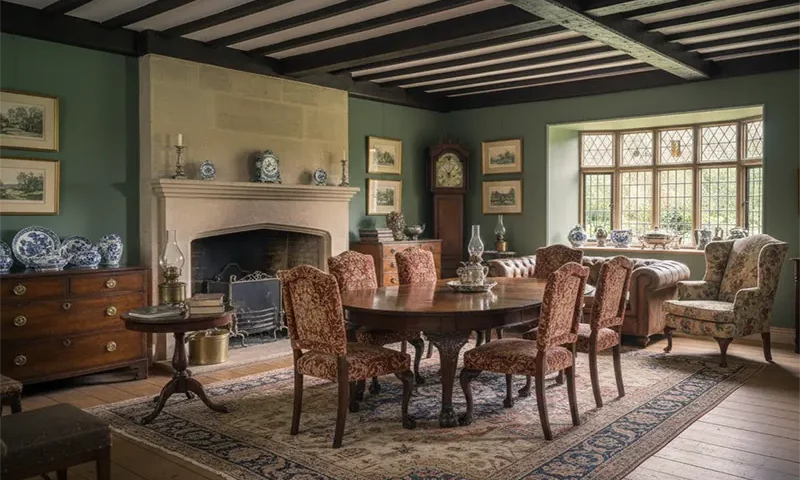
Authentic Pre-1920s Antique Furniture for Elevated English Cottage Interiors
In the world of interior design, the “English Cottage” is a term often diluted by mass-produced replicas and distressed paint. However, the Elevated English Cottage—the kind found in the rolling hills of the Cotswolds or the coastal retreats of Cornwall—eschews the “shabby chic” for something far more substantial. The soul of these interiors lies in the patina of time, a soft glow that can only be earned through centuries of beeswax, sunlight, and human touch.
To achieve this look, one must look toward authentic, pre-1920s antique furniture. These pieces act as anchors, providing a sense of historical gravity that grounds the whimsical patterns and moody palettes of a modern country home.
The Wood Chronology: A History of Texture
To understand English antiques, one must understand the wood. Collectors often refer to the “Ages” of furniture, a chronology popularized by historian Percy Macquoid that dictates the mood of a … READ MORE ...
