
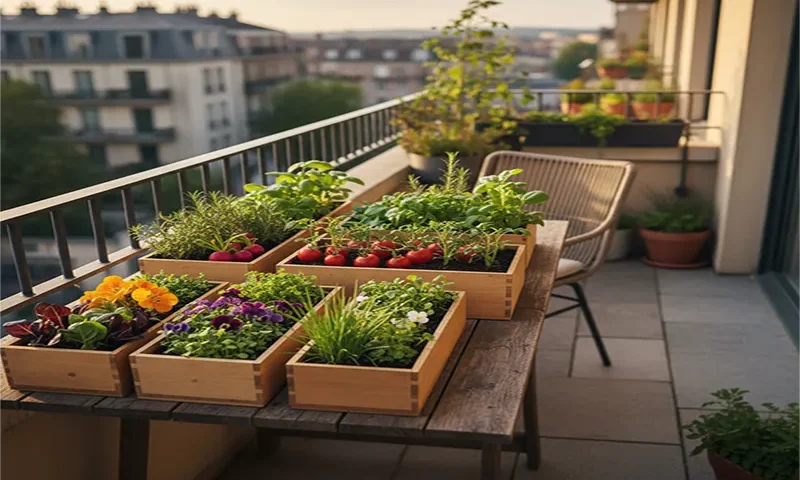
In 2026, urban dwellers are reimagining the small balcony not just as a place for a chair and a coffee, but as a Biological Sanctuary. The “Botanical Bento” trend has emerged as the sophisticated answer to high-density living—a design philosophy that treats the balcony garden like a curated Japanese lunch box. It is a system of high-density, deliberate compartmentalization where every square inch provides nourishment, visual harmony, and ecological purpose.
Unlike the “chaos gardening” of previous years, the Botanical Bento is about Micro-landscapes—highly considered arrangements that maximize yield without sacrificing the “surprisingly luxurious” aesthetic.
The Bento Strategy: Compartmentalization & Layering
The secret to a successful balcony bento is organization. By breaking your space into “compartments,” you create a sense of depth that makes even a tiny area feel like a sprawling estate.
- The “Bento Box” Layout: Instead of scattered pots, use modular troughs or raised beds with internal dividers. Use structural herbs like Rosemary or Chives to act as “edible walls” between different crops, keeping the aesthetic neat and intentional.
- Vertical “Lids”: Think of your walls and railings as the lid of the bento box. Use wall-mounted planters and railing boxes to create a “Vertical Layer”. This draws the eye upward, making the space feel fuller without feeling crowded.
- The “Thriller, Spiller, Filler” Method: * Thriller (The Centerpiece): A tall, upright edible like a Columnar Apple Tree or a Dwarf Thai Basil.
- Filler (The Mid-layer): Bushy plants like Tilling Tom Tomatoes or Lollo Rossa Lettuce.
- Spiller (The Edge-softener): Trailing edibles like Strawberries or Nasturtiums that flow over the edges of the container.
Bento Pairings: Companion Planting for Small Pots
Effective bento gardening relies on “ingredients” that play well together in confined spaces.
| Bento Compartment | Primary Crop | Companion “Filler” | Benefit |
| The Salad Box | Loose-leaf Lettuce | Radishes & Chives | Fast turnover; chives deter aphids. |
| The Mediterranean | Cherry Tomatoes | Basil & Marigolds | Basil improves tomato flavor; marigolds deter pests. |
| The Tea Garden | Lemon Verbena | Mint & Pansies | Mint is contained (prevents spreading); pansies are edible. |
| The Berry Patch | Alpine Strawberries | Creeping Thyme | Thyme acts as a living mulch to retain moisture. |
Technical Essentials: Weight and Water
Designing for a balcony requires more than just a green thumb; it requires engineering.
- Weight Management: In 2026, lightweight materials are king. Swap heavy ceramic for high-quality resin planters or fabric grow bags that mimic the look of stone but weigh a fraction of the cost. This ensures your “Bento” doesn’t exceed the structural load-bearing capacity of your balcony.
- Biological Soil Amendments: Because container soil can become “tired” quickly, use Worm Castings and Mycorrhizal Fungi. These act as the “seasoning” for your bento, ensuring your plants have the microbial life they need to thrive in a small volume of soil.
- Watering Ecosystems: Small pots dry out fast. Use containers with built-in reservoirs (self-watering) to ensure consistent moisture, especially during the peak of summer.
Sustainable Style: The 2026 “Kusumi” Palette
Modern bento gardens have moved away from bright, plastic colors. The 2026 trend is Kusumi Tones—muted, earthy colors like burnt terracotta, olive green, and dusty clay. These tones create a “quiet garden” that invites you to pause. When your containers are in harmony with the building’s architecture, the vibrant greens and reds of your ripening tomatoes become the “jewelry” of the space.
The Daily Harvest
A Botanical Bento is more than a hobby; it is a move toward Energy Sovereignty. There is a profound psychological shift that occurs when you step onto your balcony to harvest the ingredients for your evening meal. By treating your small space with the care and intention of a bento box, you prove that beauty and productivity do not depend on size. Start with one container, place it with care, and let your urban sanctuary grow.

