
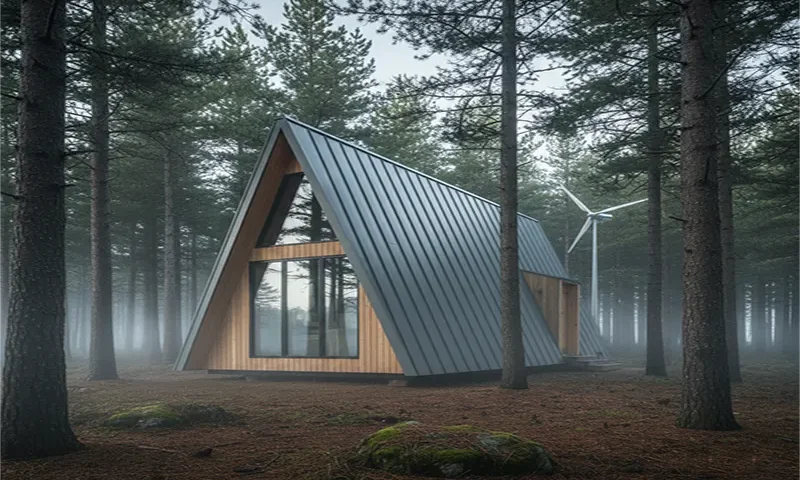
The dream of owning a secluded getaway often hits a literal wall when faced with the reality of modern land parcels. As prime real estate becomes scarcer, “in-fill” lots and slim recreational plots—sometimes as narrow as 25 to 30 feet—are becoming the new standard for eco-conscious builders.
However, a narrow lot isn’t a limitation; it’s a design catalyst. The philosophy of “building up, not out” allows homeowners to minimize their environmental disturbance, preserving the very soil and local flora they moved to the woods to enjoy. By embracing verticality and precision engineering, we can create modern sanctuaries that feel expansive despite their slender silhouettes.
Architectural Strategies for Slim Spaces
Designing for a narrow footprint requires a departure from traditional “wide-ranch” thinking. To avoid the feeling of living in a hallway, modern cabin plans utilize three core strategies:
Vertical Living and Volumetric Design
When you cannot expand horizontally, the sky is your only limit. Modern narrow plans often feature double-height ceilings in the primary living area. By “stealing” floor space from the second story to create a mezzanine or loft, you introduce a sense of volume that tricks the eye into perceiving the home as much larger than its square footage suggests.
The Glass Connection
A common pitfall of narrow homes is the “tunnel effect.” To combat this, architects focus on the short ends of the structure. By installing floor-to-ceiling glass walls on the front and back elevations, the interior space bleeds into the outdoors. This creates a visual axis that draws the eye toward the horizon, making the walls feel like mere suggestions rather than boundaries.
Minimizing the Interior Core
Every interior wall in a small cabin acts as a barrier to light and air. Modern eco-cabins often utilize a centralized utility core—grouping the bathroom, stairs, and kitchen plumbing into a single “thick wall”—to keep the rest of the floor plan open and fluid.
Sustainable Materials & Off-Grid Tech
A modern cabin must do more than look the part; it must perform with a conscience. Eco-friendly narrow cabins prioritize materials that have a low embodied energy and high thermal performance.
- SIPs (Structural Insulated Panels): These are a game-changer for narrow lots. They are pre-fabricated, meaning less site waste and a much faster assembly time—crucial when working in tight spaces where heavy machinery access is limited.
- Reclaimed Wood and Low-VOC Finishes: Using salvaged timber for cladding or flooring adds soul to a modern design while preventing new deforestation. Pairing this with low-VOC (Volatile Organic Compound) stains ensures the indoor air quality remains as pristine as the forest outside.
- Passive Solar Design: On a narrow lot, window placement is everything. Aligning the largest glass spans with the path of the sun (South-facing in the Northern Hemisphere) allows the cabin to heat itself naturally in the winter, while deep roof overhangs provide shade during the summer.
- Rainwater Harvesting: While narrow cabins have less roof surface area, they can still be incredibly efficient. Integrated gutter systems can funnel snowmelt and rain into slim-profile tanks hidden beneath the deck, providing greywater for toilets or gardening.
Layout Spotlight: Three Functional Concepts
Different terrains and lifestyles require different approaches. Here are three proven layouts for the modern narrow cabin:
1. The ‘Shotgun’ Modern
Inspired by the classic Southern shotgun house, this layout features a straight-line flow. The kitchen sits at one end, leading into a dining/living area, and ending at a massive sliding door that opens to a deck. It’s the ultimate layout for social dwellers who prioritize indoor-outdoor hosting.
2. The Stacked Cube
If the lot is exceptionally tight (e.g., 20×20 feet), the Stacked Cube is the answer. This design places the “public” spaces (kitchen/living) on the ground floor and the “private” spaces (bedroom/office) on the second. It provides excellent separation of noise and creates a distinct “retreat” feeling for the sleeping quarters.
3. The Cantilevered Cabin
For lots that are narrow and steep, a cantilevered design uses a steel or heavy timber frame to “hover” the cabin over the slope. Supported by a few concrete piers rather than a full foundation, this minimizes soil erosion and allows the home to capture views that would otherwise be blocked by the treeline.
Landscaping and Outdoor Integration
On a narrow lot, the land around the cabin is just as important as the structure itself. To maximize the living area without increasing the footprint, consider these additions:
- Permeable Pavers: Instead of concrete, use gravel or permeable grids for driveways to allow rainwater to soak back into the earth.
- Vertical Gardens: Utilize the exterior walls or privacy fences for climbing plants, herb gardens, or “green walls” that provide natural insulation and beauty.
- The “Shadow” Deck: Build a deck that mirrors the interior floor plan, effectively doubling your living space during the warmer months.
Top 5 Must-Haves for Narrow Cabin Plans
- Multi-Functional Furniture: Think Murphy beds that reveal desks or benches with hidden storage.
- Clerestory Windows: High, narrow windows that let in light while maintaining privacy from nearby neighbors.
- High-R Value Insulation: Because the exterior wall surface area is high relative to the interior volume, premium insulation is non-negotiable.
- Sliding Pocket Doors: These save the “swing space” required by traditional doors, reclaiming valuable square footage.
- Reflective Surfaces: Polished concrete floors or light-toned wood help bounce natural light deep into the narrowest parts of the plan.
Small-footprint living is more than a trend; it is a sophisticated response to the environmental and spatial challenges of the 21st century. By choosing a narrow-lot cabin plan, you aren’t just saving on property costs—you are committing to a lifestyle that values quality over quantity and architectural ingenuity over sheer square footage. Whether it’s a stacked cube in the mountains or a glass-ended “shotgun” by the lake, the modern eco-cabin proves that some of the biggest lives are lived in the smallest spaces.

