
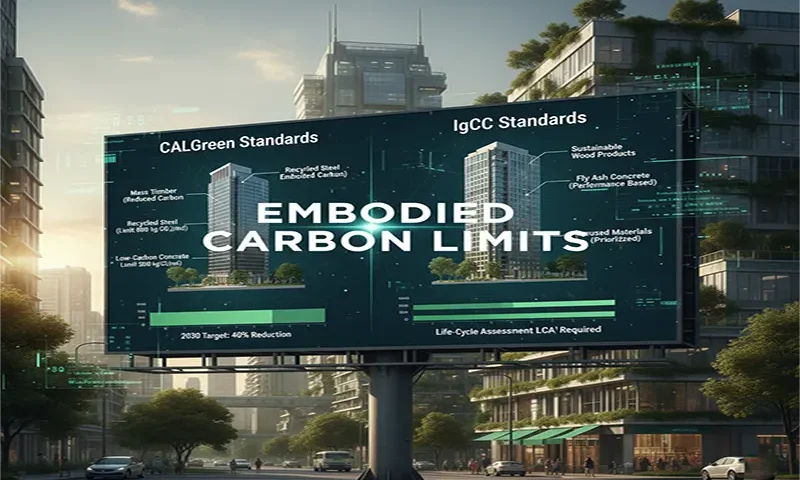
Embodied Carbon Limits for Building Materials under CALGreen and IgCC Standards
As of January 1, 2026, the landscape of commercial construction in California and across the United States has shifted. The focus of sustainable design, once dominated by operational energy (the power used to light and heat a building), has turned toward Embodied Carbon—the greenhouse gas emissions “locked in” during the extraction, manufacturing, and transportation of building materials.
In California, the mandatory 2026 updates to CALGreen (Title 24, Part 11) represent the most aggressive decarbonization policy in the nation, lowering the compliance threshold to include almost all mid-sized commercial developments. Simultaneously, the International Green Construction Code (IgCC) provides the national framework for jurisdictions outside of California to adopt similar high-performance standards.
The Regulatory Landscape: The 2026 Mandate
Effective January 1, 2026, California mandates that all new non-residential construction projects (and additions/alterations) exceeding 50,000 square feet must comply with embodied carbon reduction measures. This is a significant drop from the 2024 … READ MORE ...
