
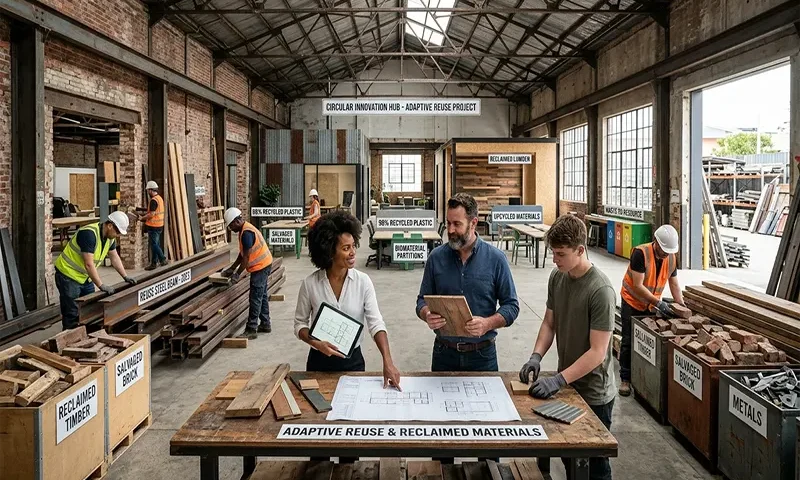
How to Implement Circular Economy Principles in Commercial Adaptive Reuse Architecture
In 2026, the commercial real estate sector faces a dual challenge: stringent ESG reporting requirements and the volatility of global material supply chains. As regulatory frameworks like the EU Taxonomy and various “Retrofit First” municipal policies shift from guidance to enforcement, the industry is undergoing a fundamental transformation.
We are moving away from the traditional “take-make-dispose” model of construction. Today, the most forward-thinking developers view adaptive reuse not merely as a renovation project, but as a strategic circular transformation. By maintaining the embodied carbon of existing structures and treating buildings as material banks, developers can unlock long-term asset value while future-proofing their portfolios against carbon taxation and resource scarcity.
The Foundation: The Building as a Material Bank
A circular approach treats every existing commercial structure as a repository of valuable resources—steel, concrete, timber, and glass—that have already incurred their “carbon debt.” Adaptive reuse is the ultimate expression of circularity; … READ MORE ...
