
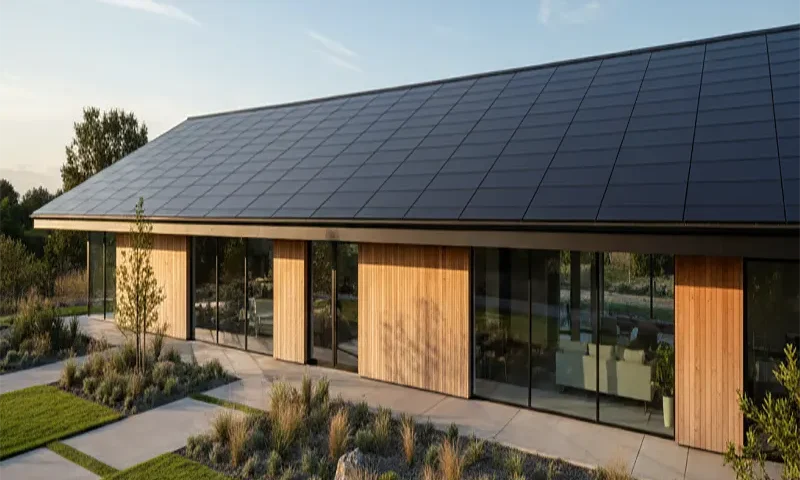
Invisible Energy: Building-Integrated Photovoltaics for Modern Home Roof Aesthetics
For decades, the adoption of solar energy was often a compromise between environmental conscience and architectural integrity. Homeowners were forced to choose between carbon neutrality and the visual harmony of their rooflines. We are now firmly past the “Bolt-On” era. The traditional blue-black rectangles of Building-Applied Photovoltaics (BAPV), held aloft by unsightly aluminum rails, are being replaced by a more elegant solution: Building-Integrated Photovoltaics (BIPV).
In 2026, the roof is no longer just a passive shield against the elements; it is an active, power-generating skin. BIPV represents the ultimate convergence of structural engineering and renewable energy, where the solar cell is the building material itself.
The 2026 BIPV Technology Landscape
The transition from “solar panels” to “solar surfaces” has been driven by three primary technological breakthroughs that have matured significantly this year.
1. Solar Tiles and Modern Shingles
Companies like Tesla and GAF Energy have refined the solar shingle to … READ MORE ...
