
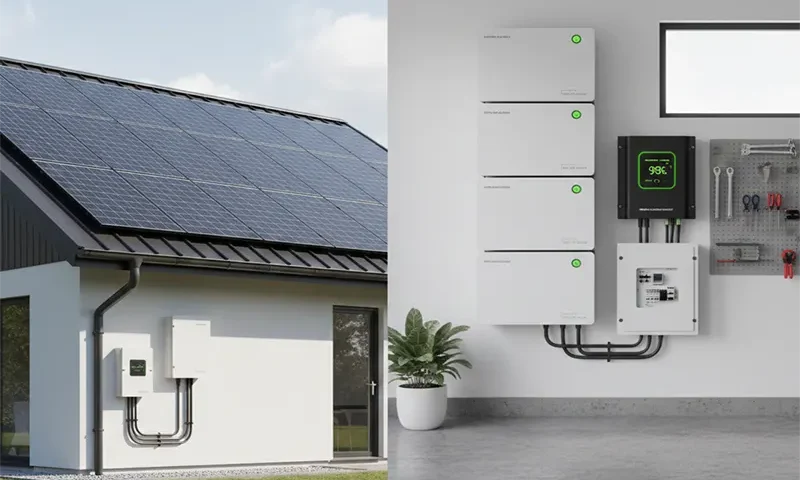
Whole House Solar Battery Backup Systems for Off-Grid Resilience
In 2026, the American energy landscape is undergoing a fundamental shift. Aging grid infrastructure, combined with the increasing frequency of extreme weather events, has moved residential energy storage from a “green luxury” to an essential component of home resilience. Homeowners are no longer satisfied with simple “partial backup”—the ability to keep a few lights and a refrigerator running. The modern standard is Energy Sovereignty: the capacity for a home to operate in Islanded Mode indefinitely, maintaining full lifestyle continuity regardless of grid status.
The Resilience Mandate: Energy vs. Power
To understand a whole-house backup system, one must first distinguish between two critical metrics: Energy (kWh) and Power (kW).
- Energy (Kilowatt-hours): This is the size of your “fuel tank.” A 20kWh battery can theoretically run a 1kW load for 20 hours. It determines how long you can stay off-grid.
- Power (Kilowatts): This is the “size of the pipe.” It
