
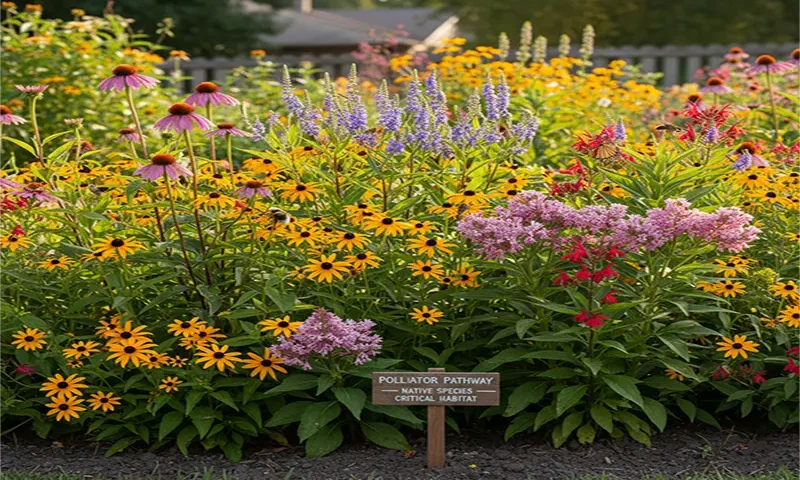
Keystone Native Plant Species for Supporting Local Pollinator Pathways
In the field of restoration ecology, the year 2026 has marked a definitive shift in how we view our backyard gardens. We have moved past the generic “save the bees” sentiment toward a more precise, data-driven approach: building functional pollinator pathways. The central pillar of this strategy is the use of keystone native plant species.
Just as the keystone in a Roman arch holds the entire structure together, these specific plants provide the essential foundation for our local food webs. Without them, the arch of biodiversity collapses.
The Keystone Concept: 14% Supporting 90%
The biological reality of our ecosystems is surprisingly lopsided. Research by entomologist Dr. Doug Tallamy and his colleagues has revealed a startling statistic: a mere 14% of native plant genera support 90% of the butterfly and moth species (Lepidoptera) that provide the critical protein (caterpillars) needed to feed birds and other wildlife.
In a pollinator … READ MORE ...
