
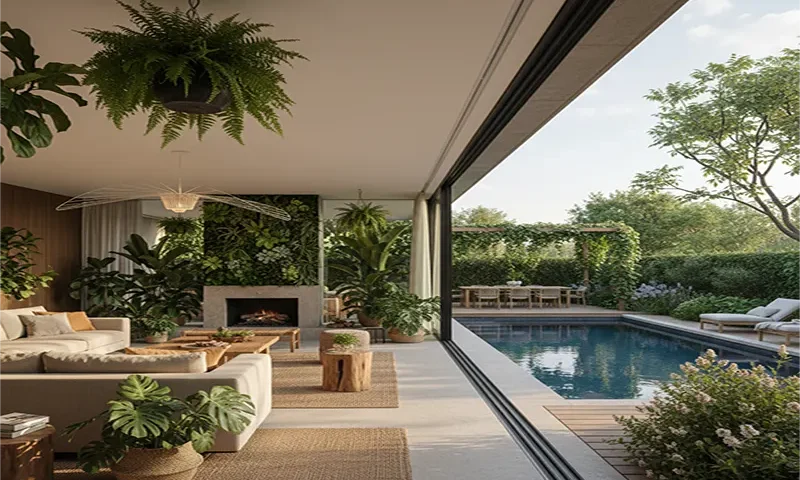
Modern Biophilic Home Designs for Sustainable Indoor-Outdoor Living
In 2026, the concept of a home has undergone a radical transformation. We have moved past the era of stark, “clinical” minimalism and entered the age of the Biological Sanctuary. Modern biophilic design is no longer just about adding a few potted plants to a room; it is an evidence-based architectural framework that treats the home as a living, breathing ecosystem. By weaving nature’s rhythms—light, texture, and organic geometry—into the very fabric of our dwellings, we are creating spaces that don’t just house us, but actively heal us.
The 2026 Biophilic Mandate: From “Decor” to “System”
The modern biophilic mandate is rooted in the psychological theory of Soft Fascination. Unlike the “hard fascination” required to navigate a digital screen or a busy city street, nature captures our attention effortlessly, allowing our directed attention reserves to replenish. In 2026, architects are using this to combat “digital fatigue” by designing … READ MORE ...
