
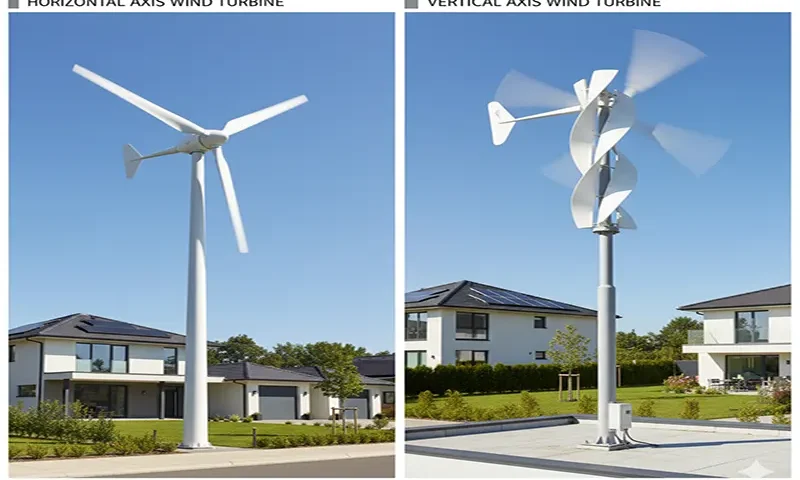
Vertical vs. Horizontal Axis Wind Turbines for Small-Scale Home Use
As we move further into 2026, the decentralization of the energy grid has transformed from a futuristic concept into a backyard reality. While solar panels have long dominated the residential landscape, wind energy is seeing a massive resurgence thanks to quieter, more efficient turbine designs. For the homeowner, the primary dilemma is no longer “to wind or not to wind,” but rather which geometry is best suited for their specific environment: the traditional Horizontal Axis Wind Turbine (HAWT) or the modern Vertical Axis Wind Turbine (VAWT).
Choosing the wrong turbine can lead to a “white elephant” on your roof—a machine that spins but never produces enough torque to overcome its own internal friction. Understanding the physics and situational advantages of each is critical to making an informed investment.
The Physics of Wind: The Betz Limit
Before comparing designs, we must address the fundamental law of wind energy. Regardless of … READ MORE ...
